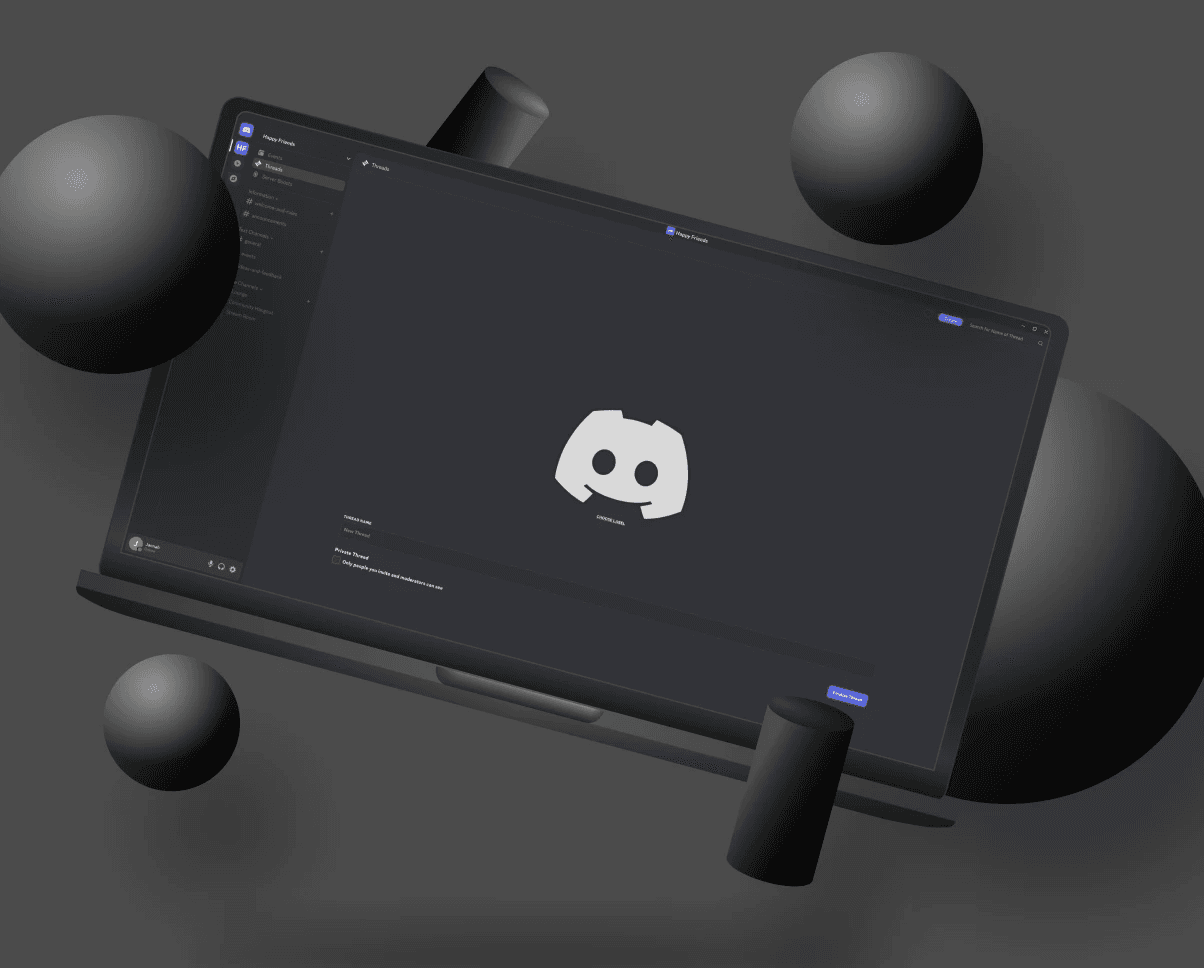
Uncovering Why Threads Go Unused
Discord threads were intended to organise fast-moving discussions, yet most users ignored them. In interviews, participants admitted they struggled to find, manage, or return to active threads. Notifications were unreliable, and visibility within busy channels was poor.
“I know threads exist, but I’ve never really used them.” - Jackson
“I had a hard time getting notified when they responded.” - Ella
“Sometimes a conversation starts without realizing it should be a thread.” - Angie
This fragmentation led communities to abandon threads entirely, defaulting back to cluttered general chats or moving conversations to external tools. The challenge was clear: make threads feel intuitive, visible, and worth using again.
Redefining the Experience to Bring Back Clarity
My goal was to reimagine the thread system without breaking what users already love about Discord, its casual, conversational nature.
I focused on three core outcomes:
Improve Discoverability – Threads should be visible, easy to find, and feel part of the main chat flow.
Simplify Re-engagement – Returning to active discussions should be effortless, with clearer entry points and notifications.
Preserve Familiarity – Any visual or interaction changes should feel native to Discord’s brand and rhythm.
The target wasn’t just usability, it was conversation fluidity: helping users talk more freely without friction or confusion.
Creating a More Engaging, Fluid Experience
The redesign aimed to transform how users experience conversation flow. Through usability testing, users consistently described the prototype as “still Discord” familiar yet clearer.
What Worked Well:
Overall Fluidity: Users found the design intuitive and consistent with Discord’s brand.
“Move to Thread” Feature: Highly praised for helping organize busy conversations.
Thread Engagement: Participants expressed they’d use threads more often with the new structure.
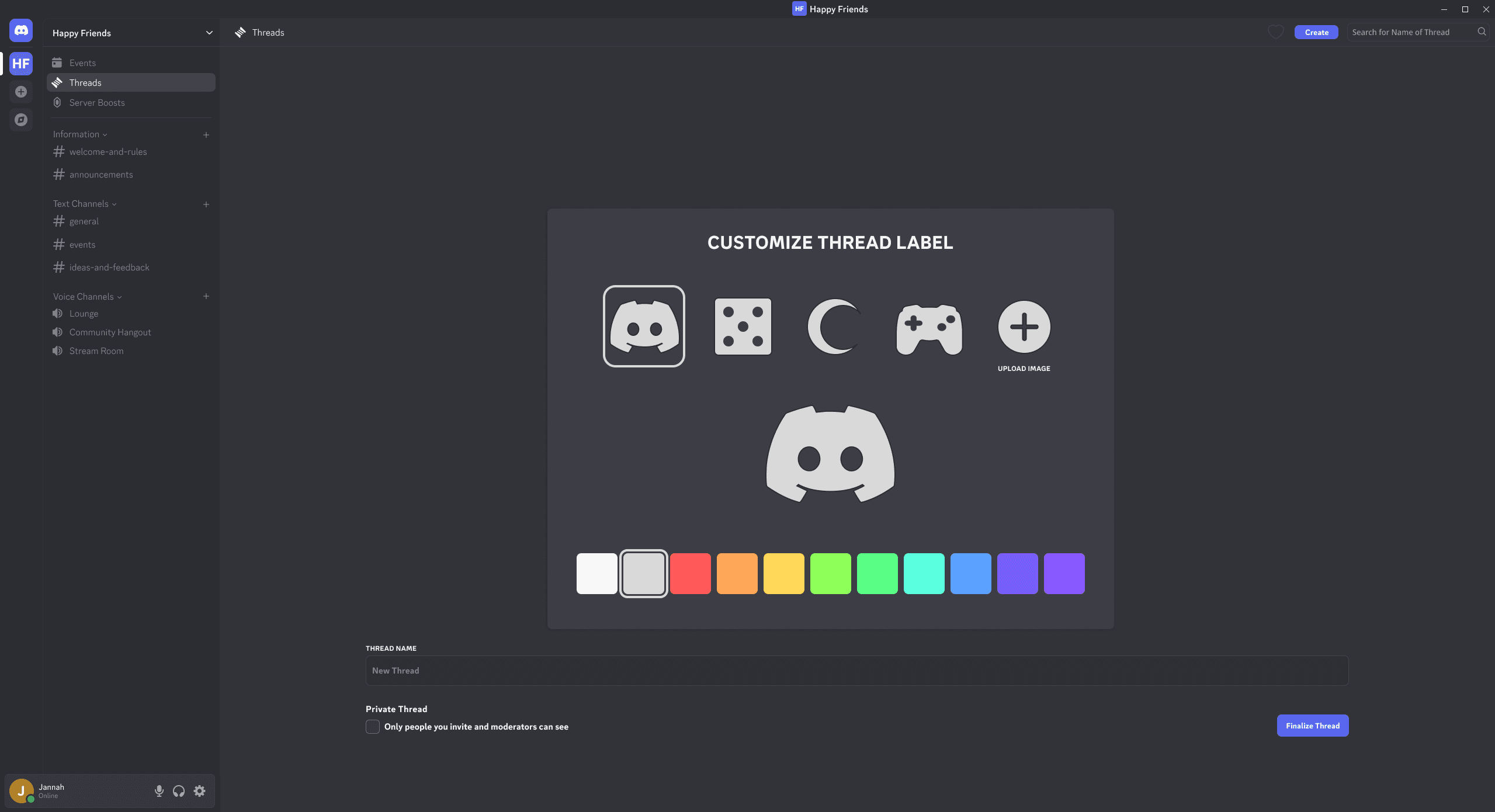
Tagging/Labeling: Seen as valuable for busy servers, improving thread visibility and context.
Pain Points Identified:
Notification Settings Entry: Some confusion around where to access or adjust notifications.
Access Pathways: Limited visibility of thread controls; users wanted multiple access points.
Preview Feedback: Some requested a short confirmation when moving messages to a thread.
The impact was clear: reducing friction led to stronger engagement, making threads a tool users wanted to use rather than ignore.
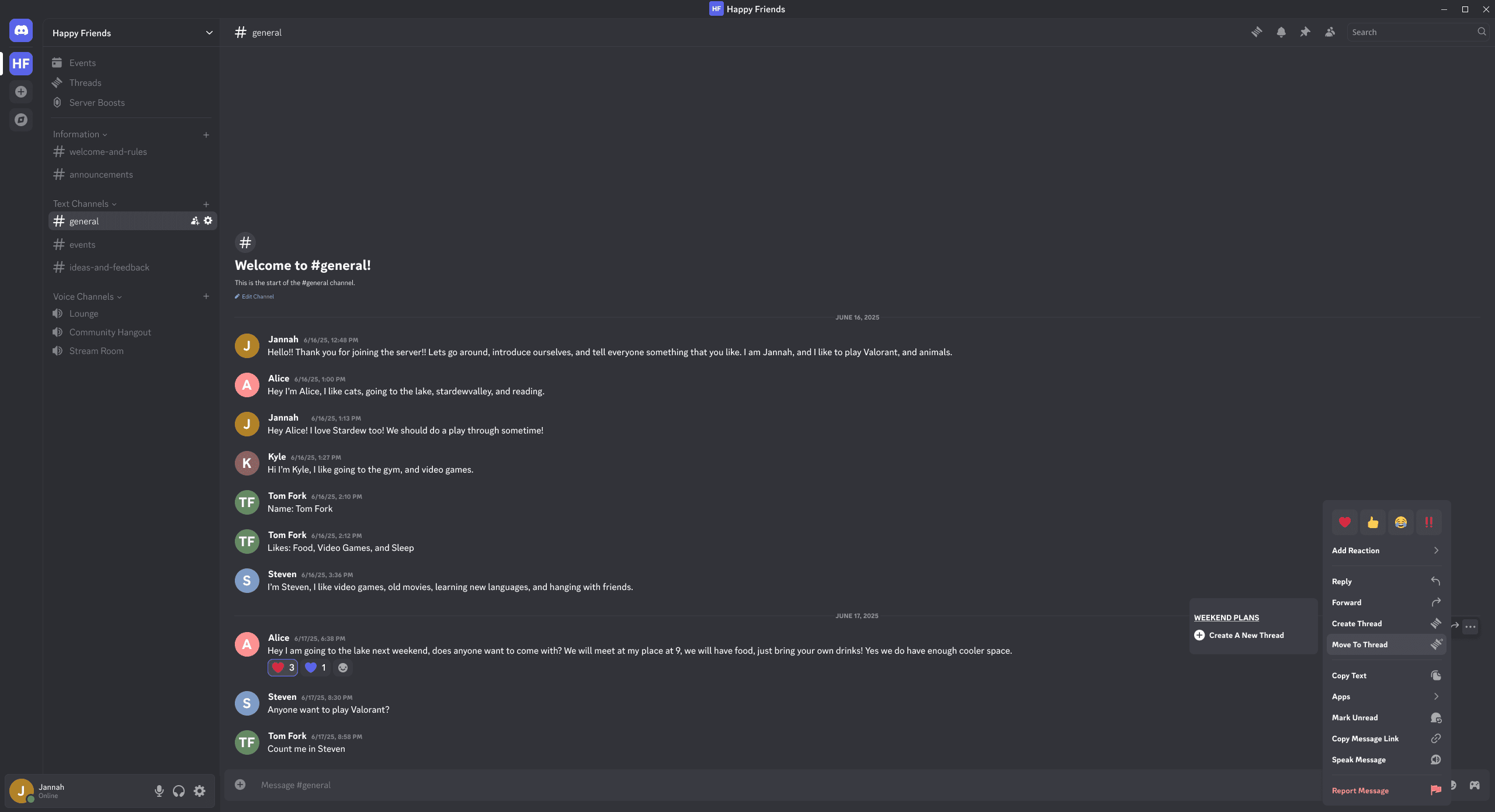
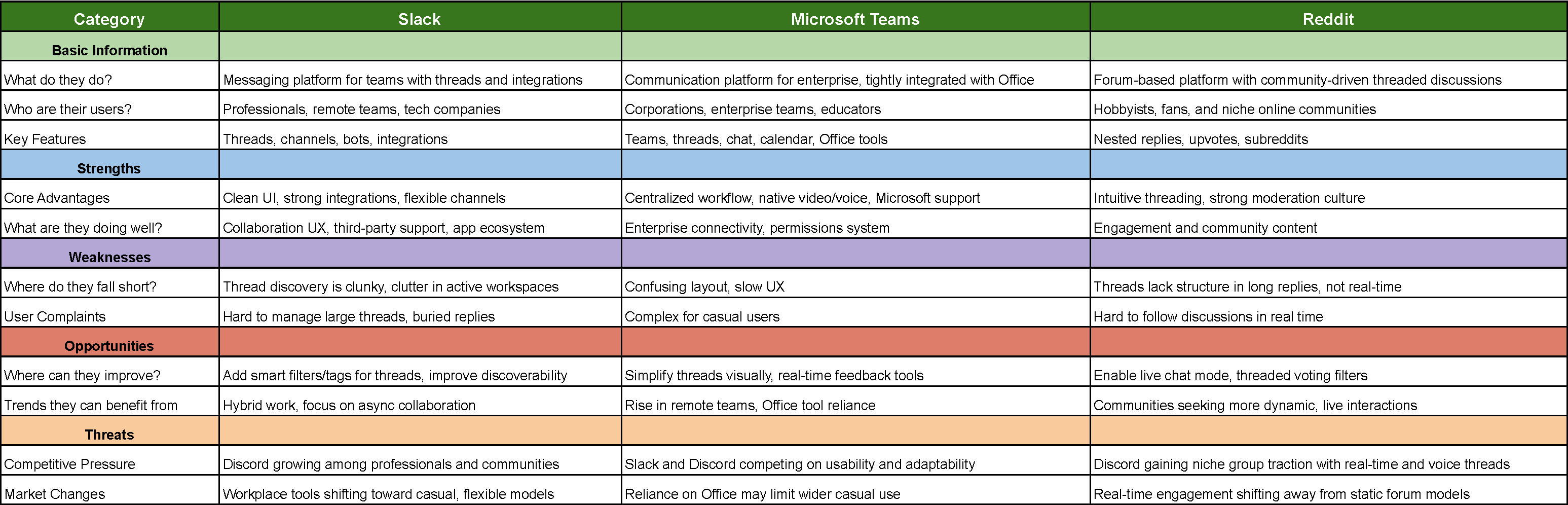
Mapping the Experience to Reveal Opportunities
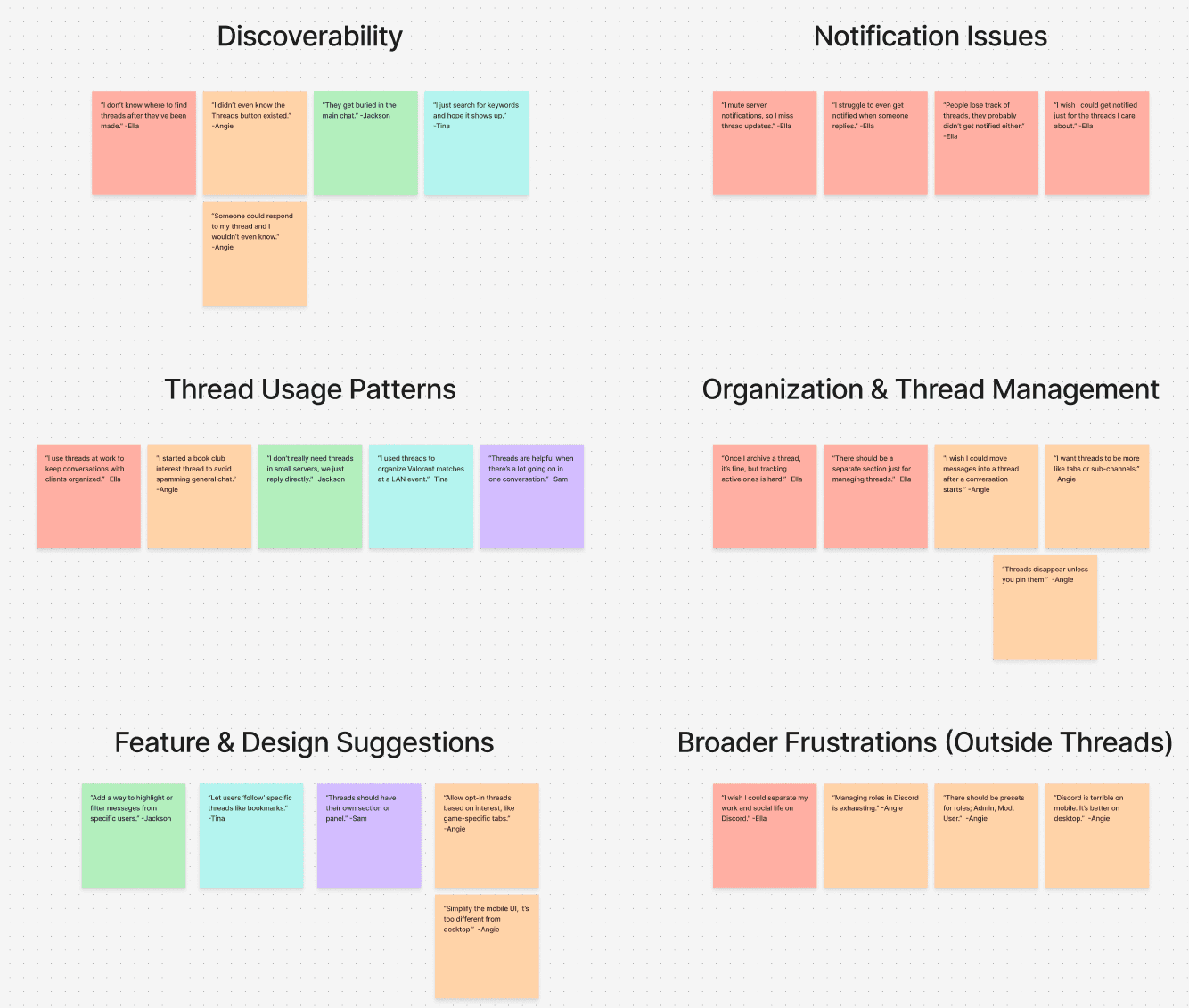
Discord users struggle with thread discoverability and notifications, as threads bury easily, lack dedicated access, and fail to alert reliably amid server mutes. Threads prove valuable for work, events, and busy chats but feel unnecessary in small servers, with management hindered by poor tracking and archiving. Key suggestions include dedicated thread panels, followable threads, selective notifications, message-to-thread migration, and improved mobile UI consistency.
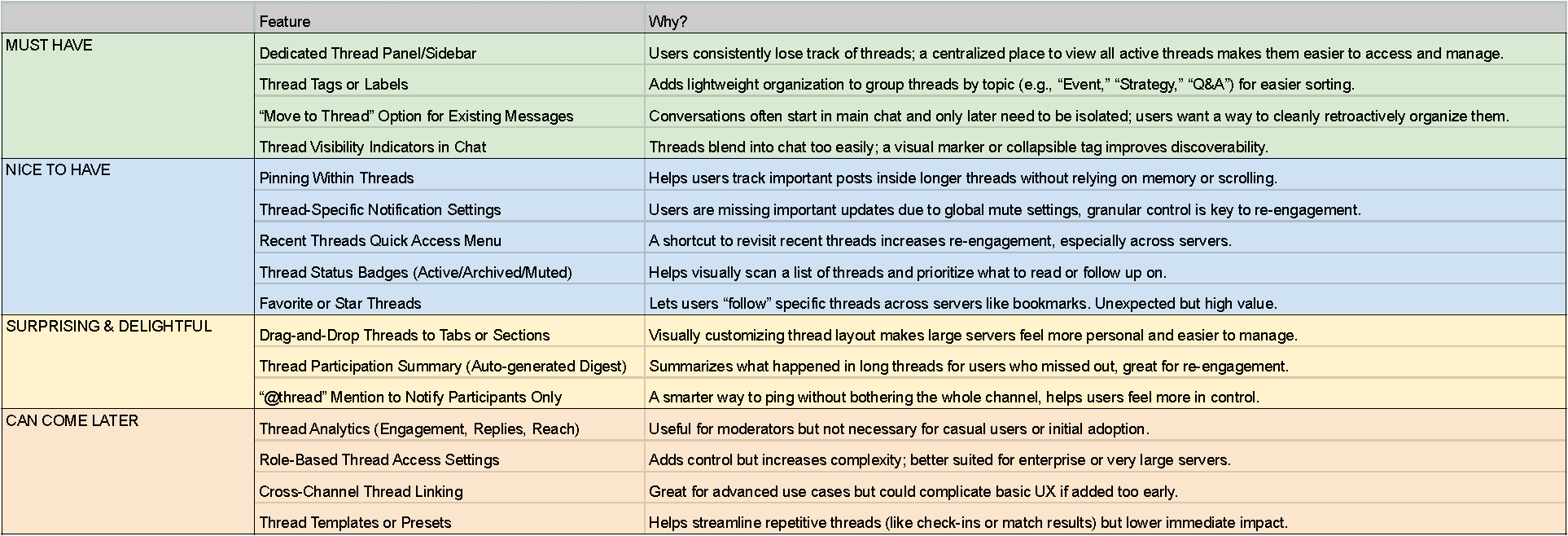
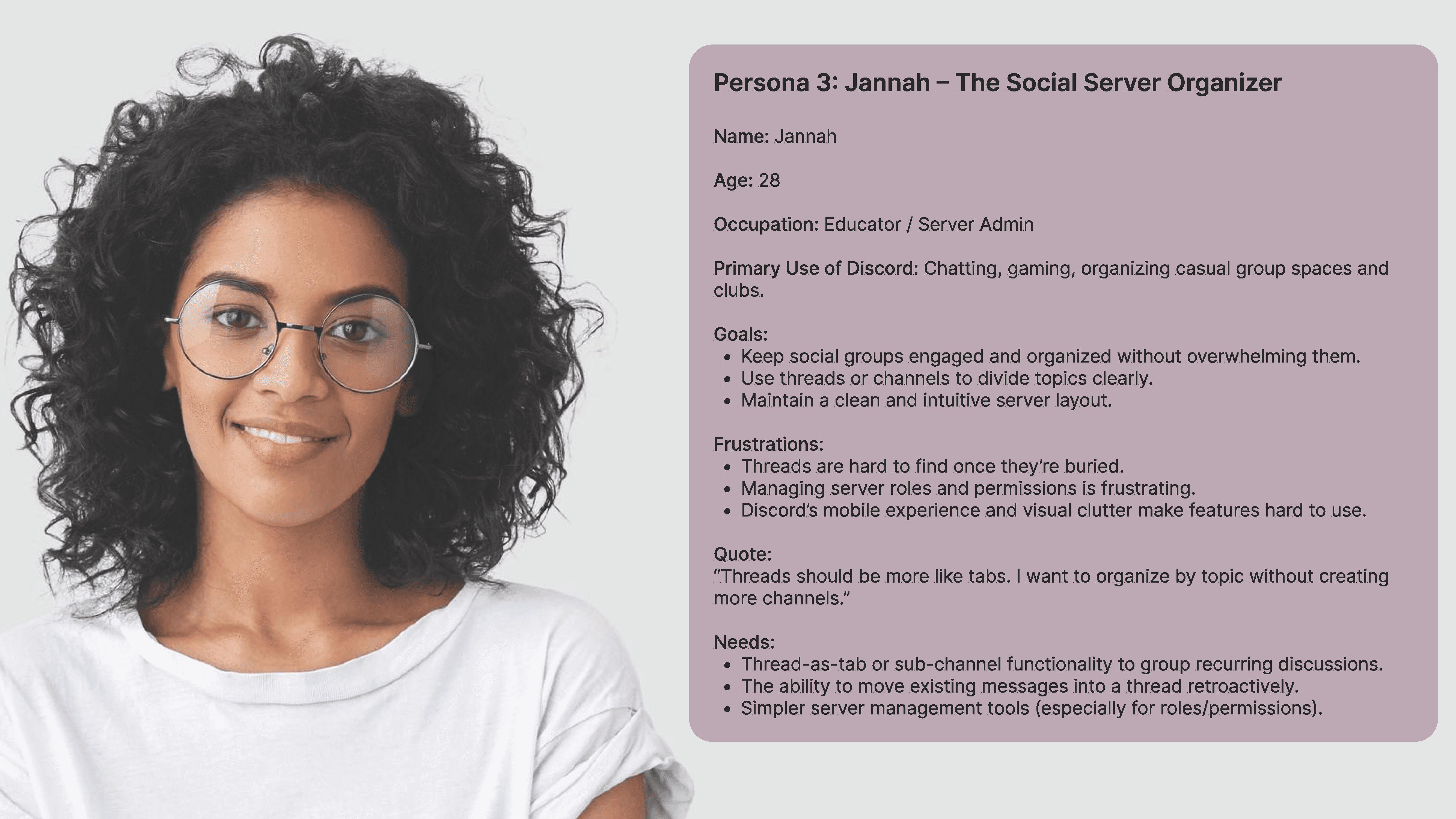
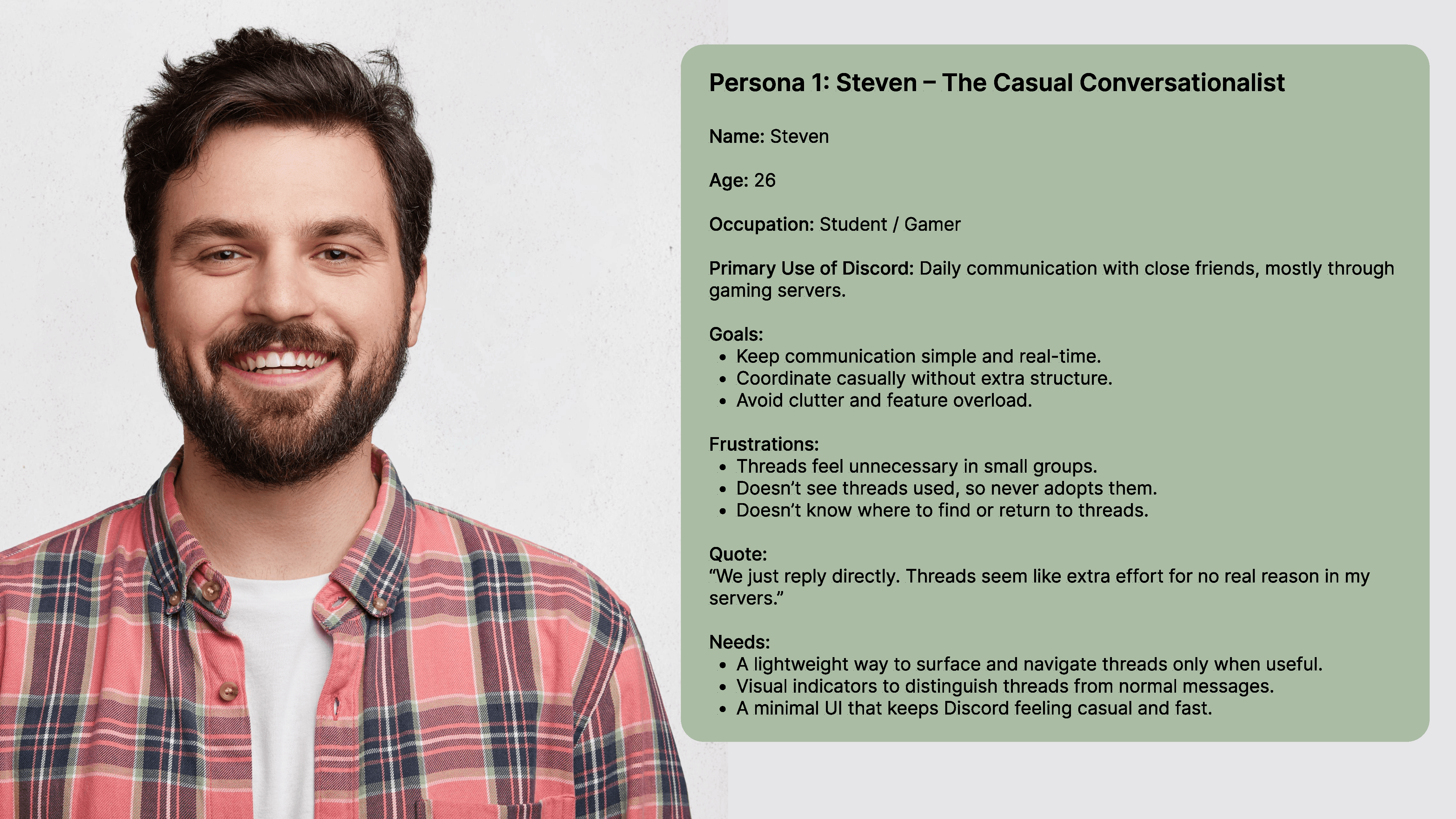
Discord users, from casual gamers like Steven to organized admins like Jannah, struggle with thread discoverability, notifications, and management, as threads bury in chats, lack dedicated access, and fail to alert reliably. Threads add value for work, events, and topic separation but feel unnecessary in small groups and hard to track without followable panels or selective alerts. Key needs include lightweight thread navigation, tab-like organization, message-to-thread migration, simpler role management, and consistent mobile UI.
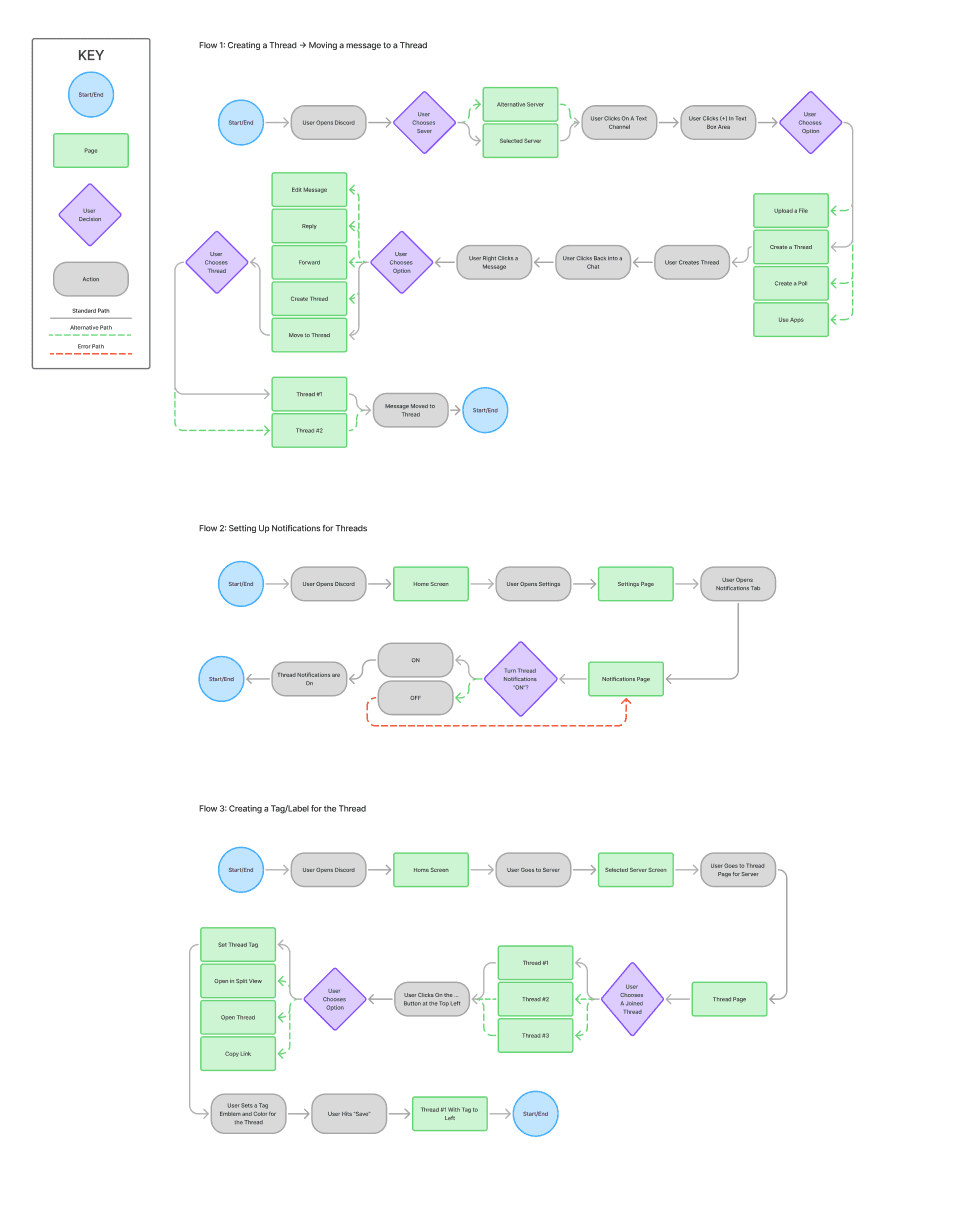
The proposed Discord user flow enables quick thread access by opening the app, selecting a server, clicking the "Threads" button, and favoriting threads via a heart icon for persistent visibility. Users manage notifications separately through Settings > Notifications, toggling favorited thread alerts on/off independently from server mutes. This addresses discoverability and notification pain points by centralizing thread management and enabling selective, reliable updates without channel clutter.
Using affinity maps and user personas, I identified recurring behaviors: users jumping between channels mid-discussion, losing track of replies, or recreating conversations outside Discord.
Simplifying Navigation Through Thoughtful Wireframes
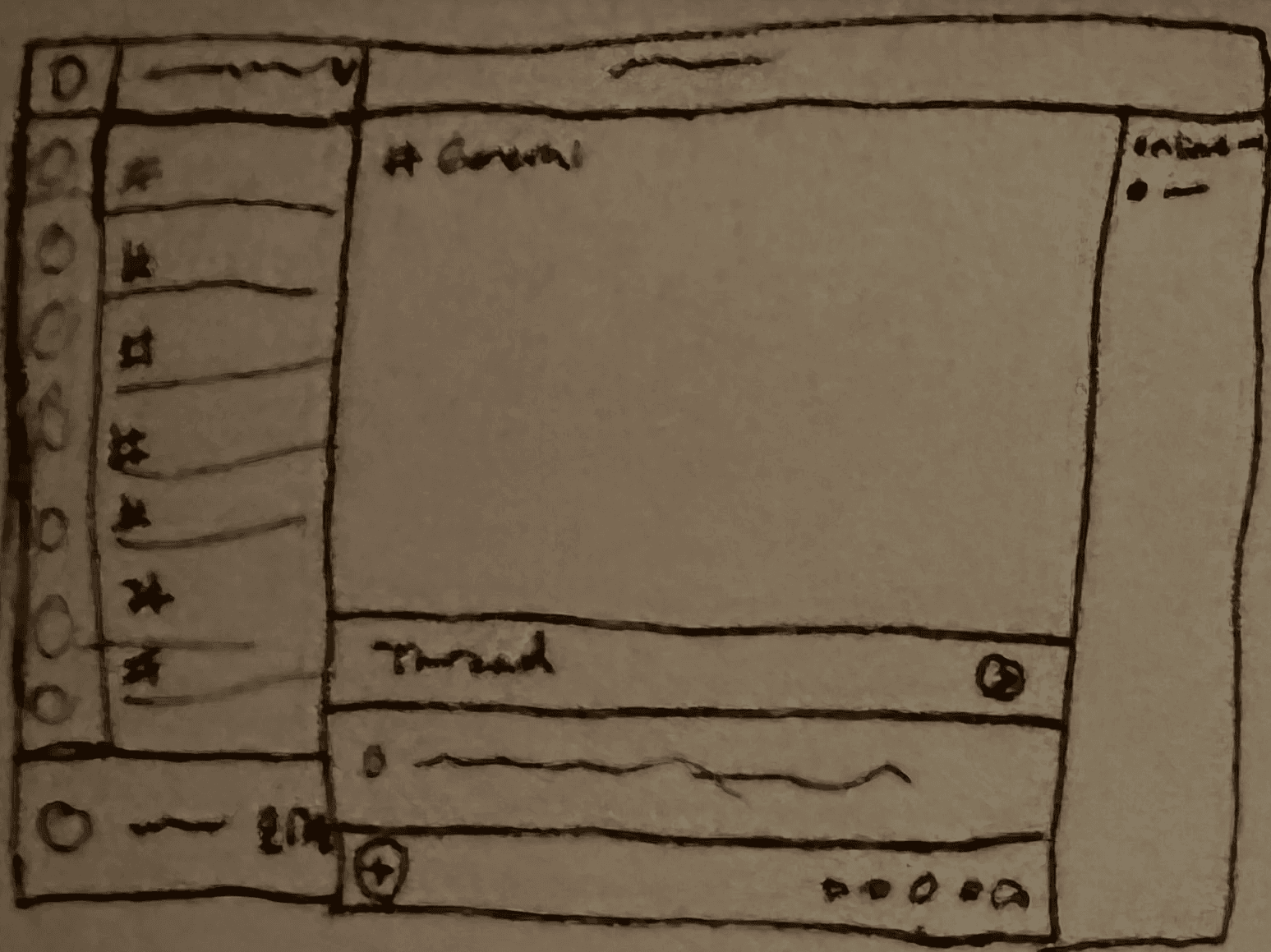
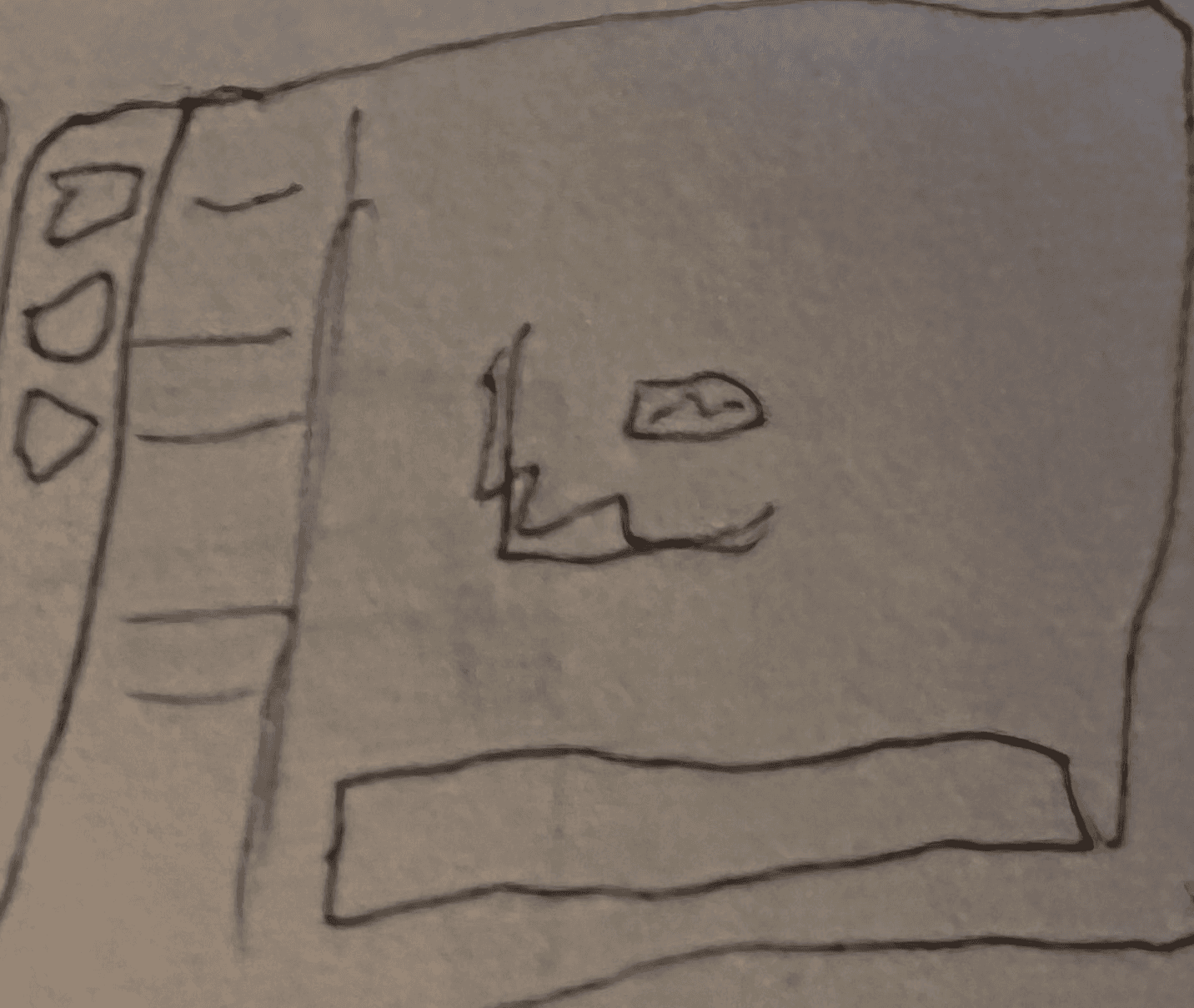
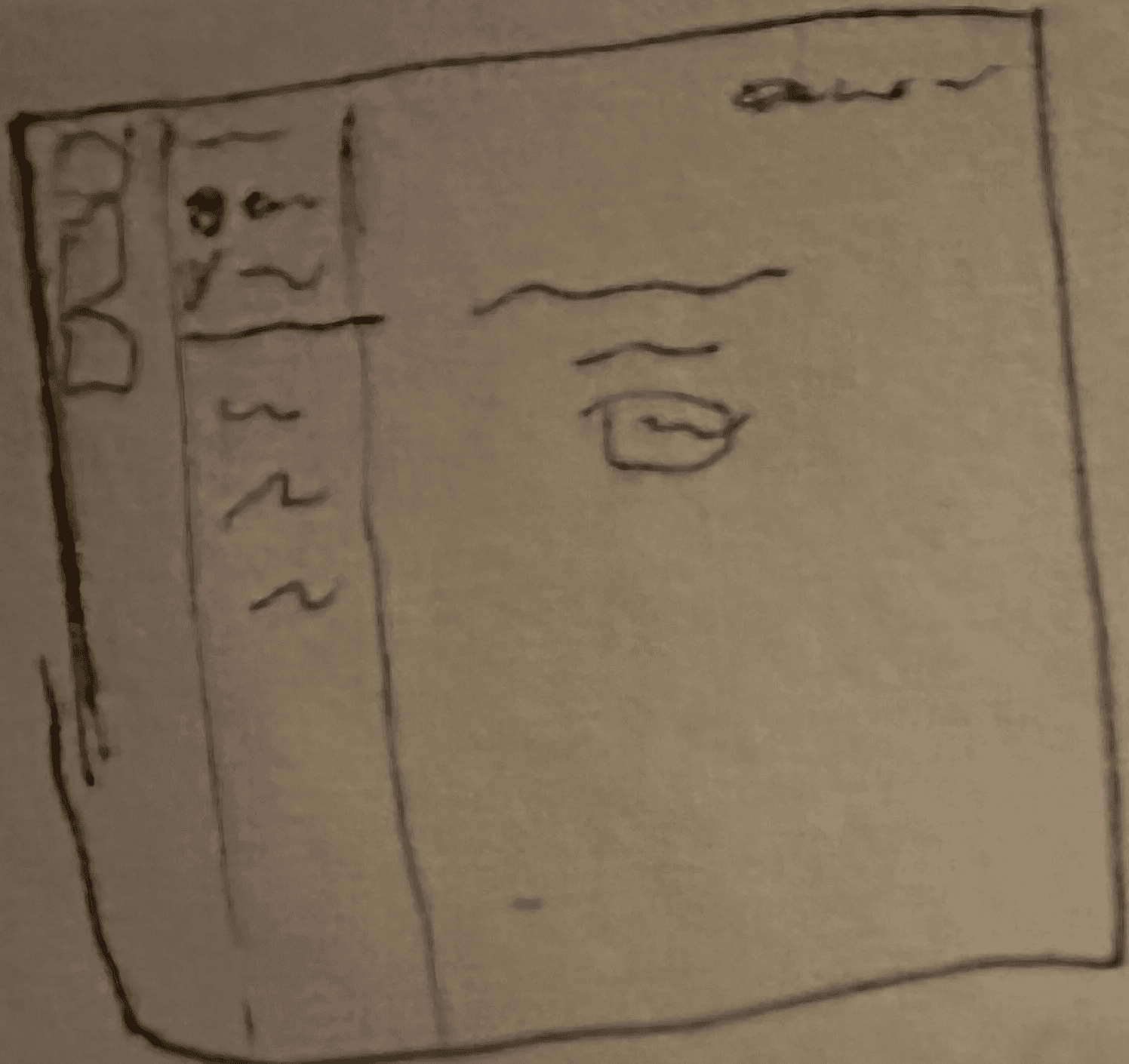
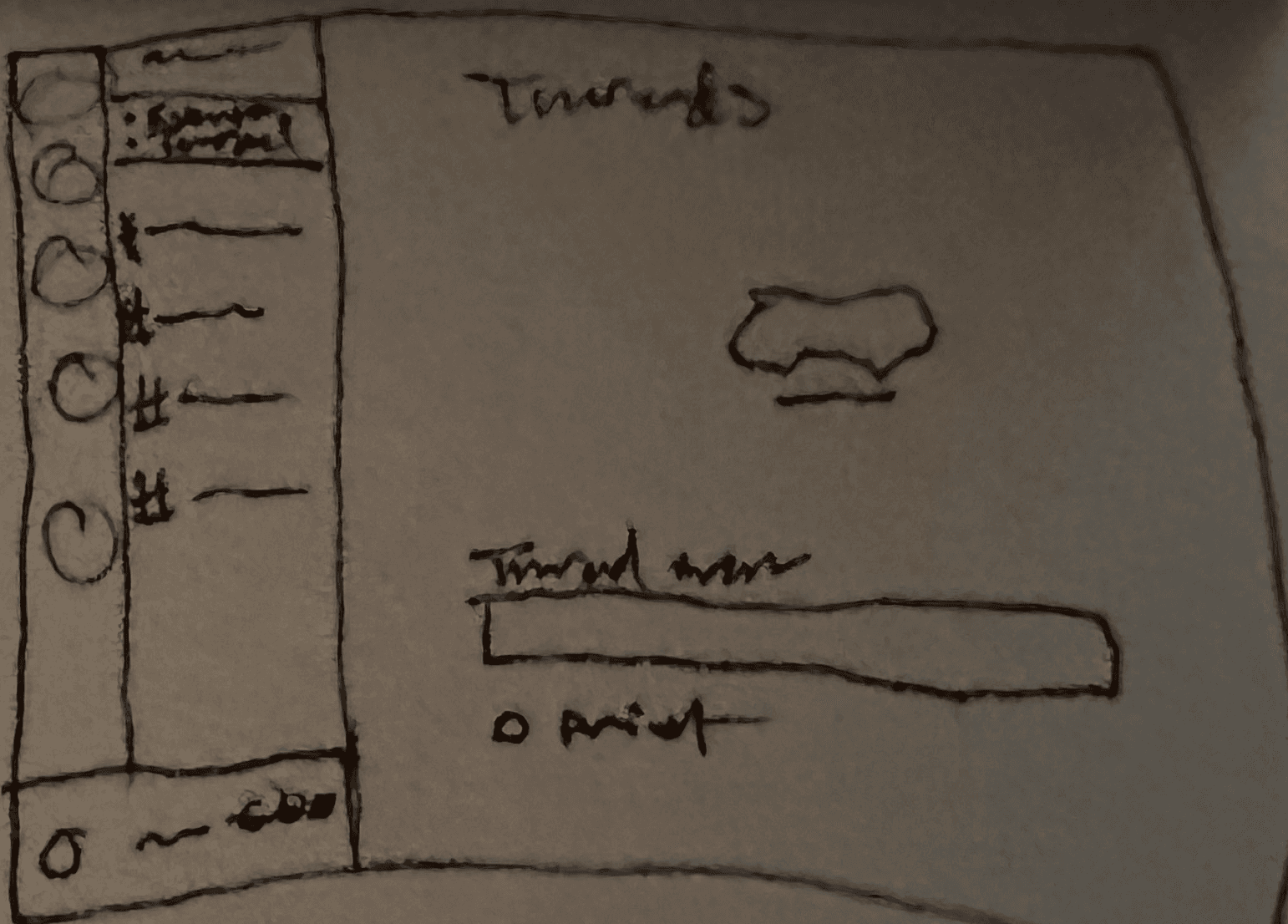
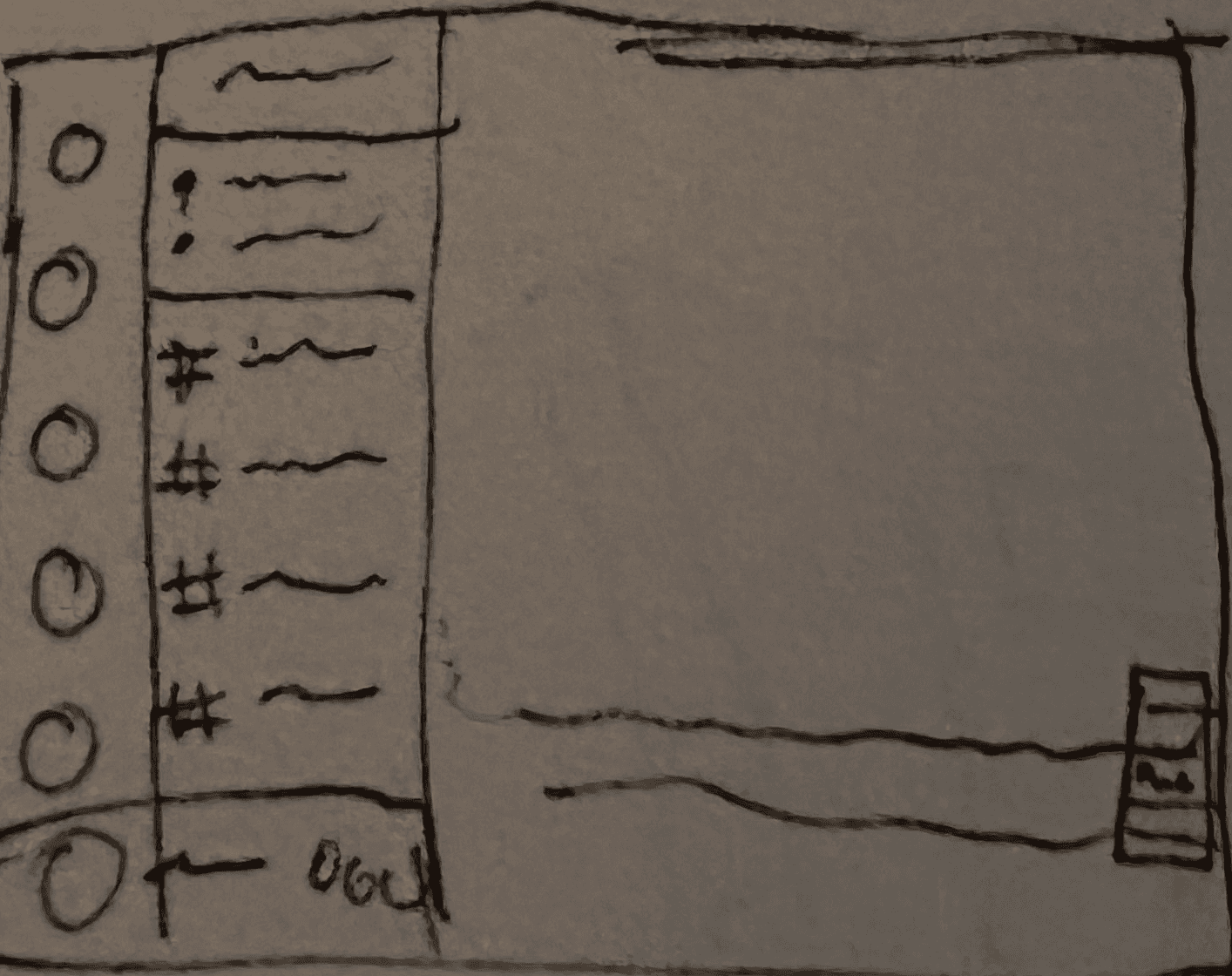
Designing the Lo-Fi screens I worked towards simplicity in the design since users are on Discord for quick and efficient communication.
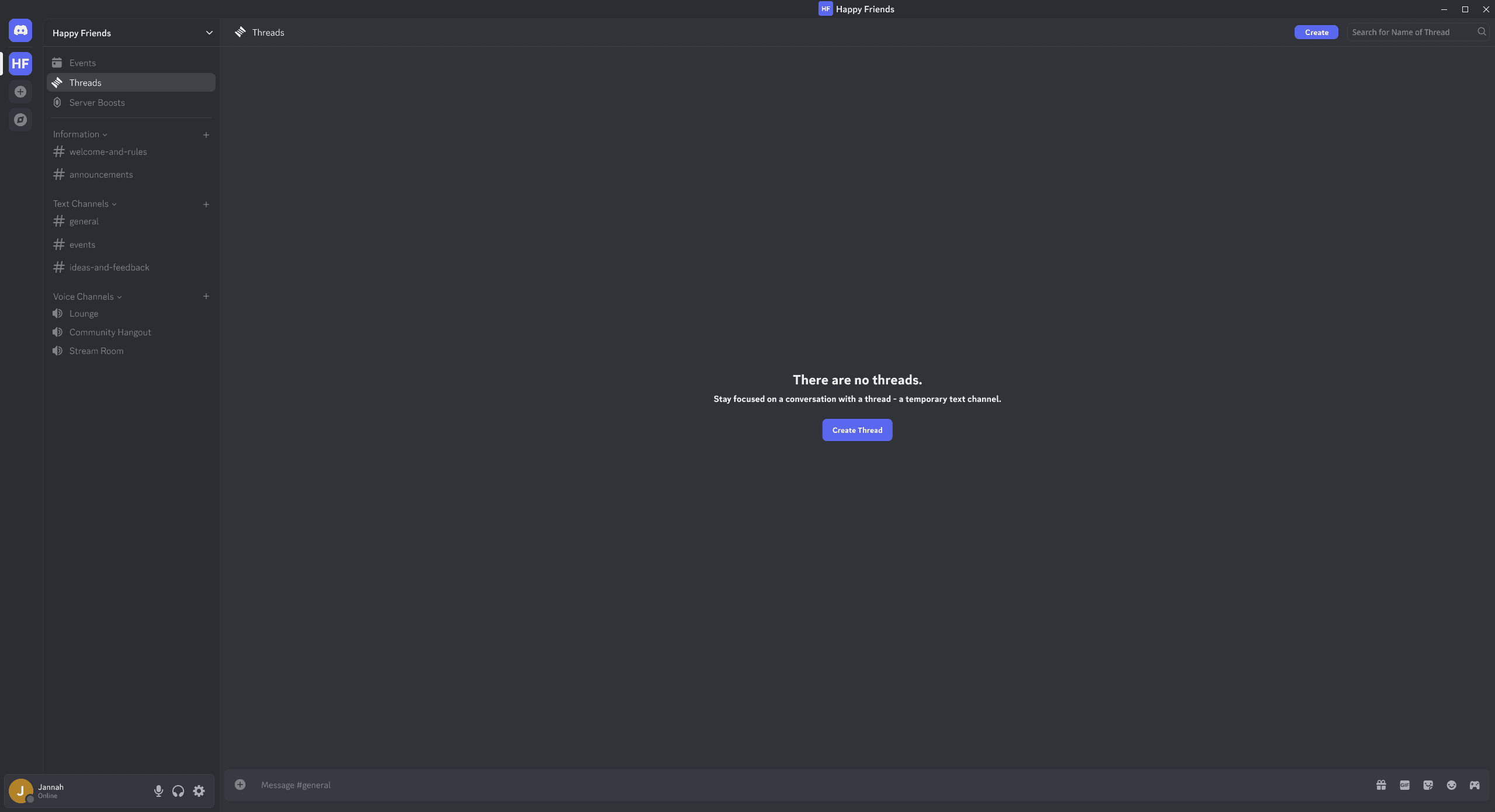
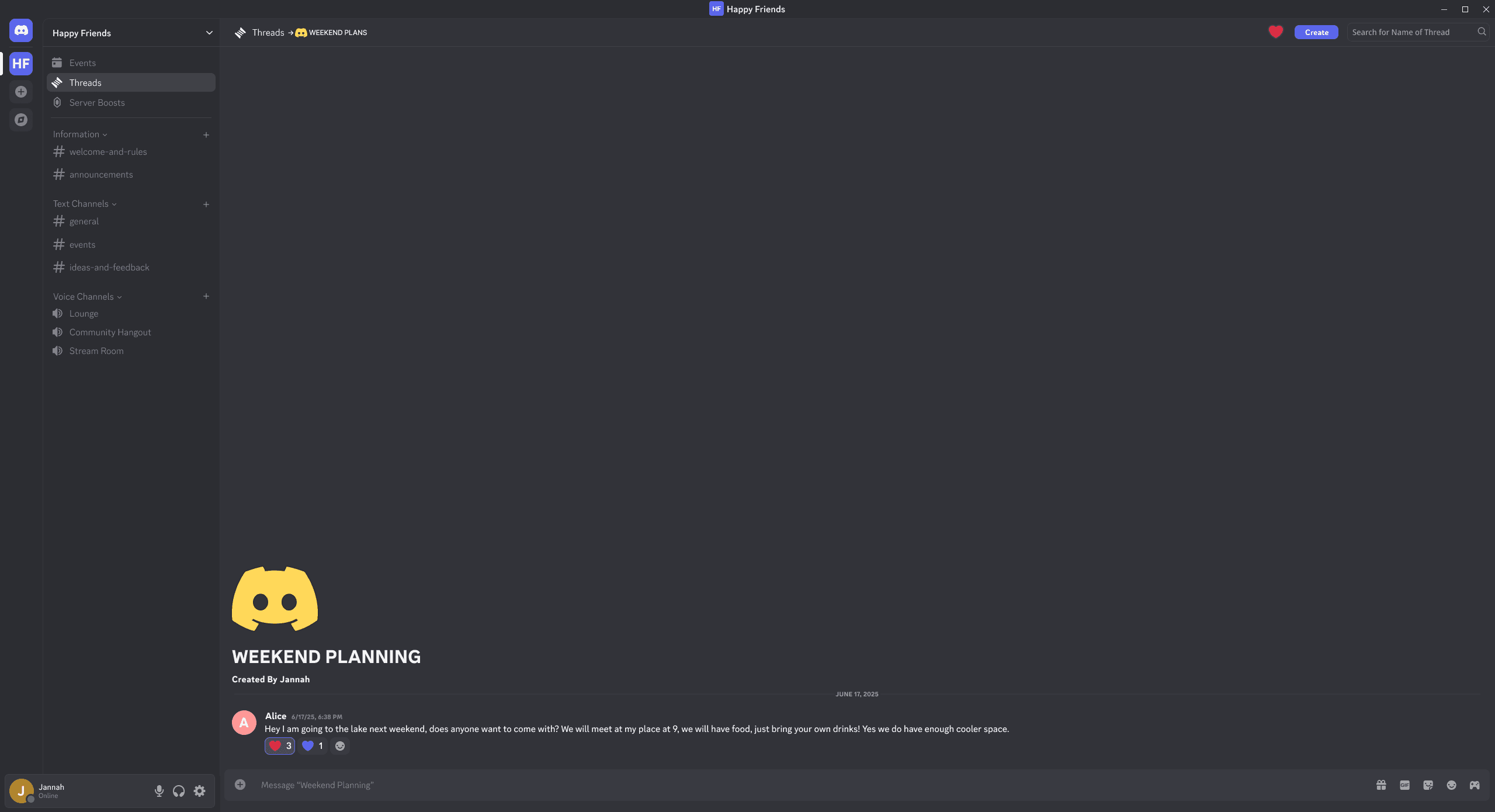
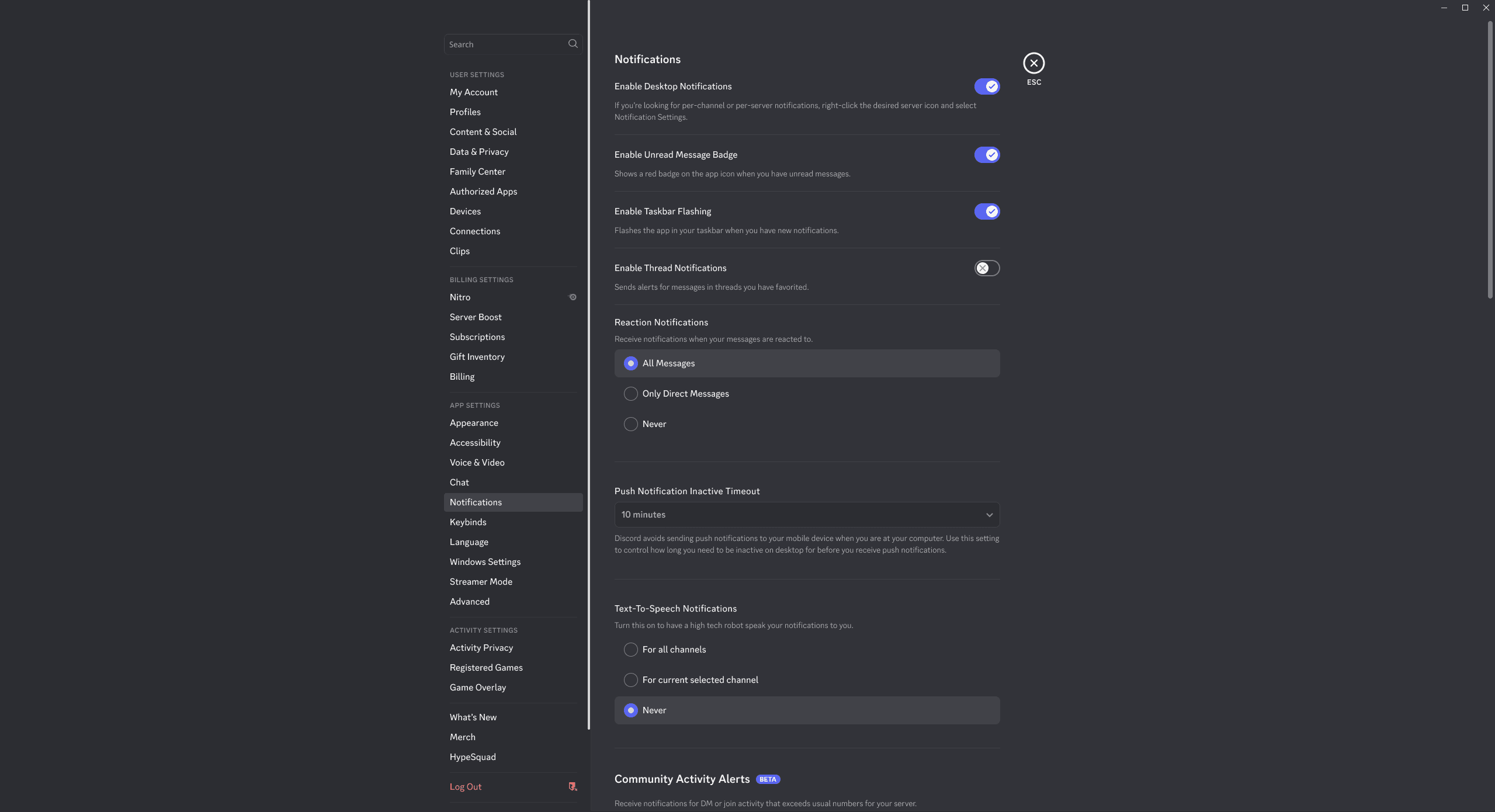
Keeping the UI and visual design as similar to the Discord brand and maintaining efficiency was the key focus when I was designing.
The lo-fi wireframes focused on simplicity, clear thread access points, visual hierarchy, and notification cues. In the hi-fi design, I preserved Discord’s brand character, typography, spacing, and colors remained consistent to ensure the redesign felt natural, not foreign.
Validating Through Usability Testing
During tests, participants completed all three task flows with minimal friction. The redesigned interactions made moving messages, tagging threads, and rejoining conversations feel seamless. Small clarity improvements had a big impact on confidence and engagement.
Validating Through Usability Testing
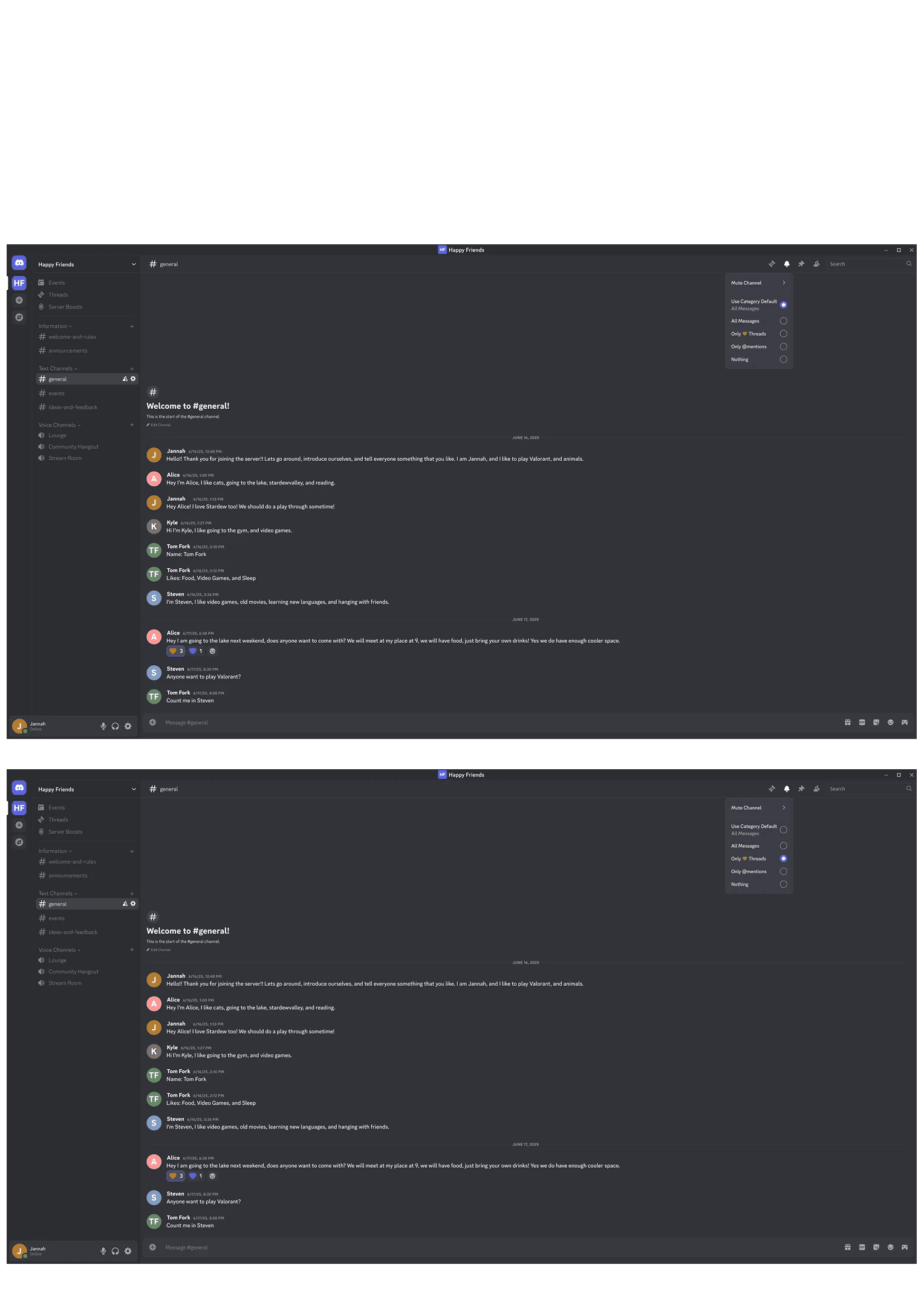
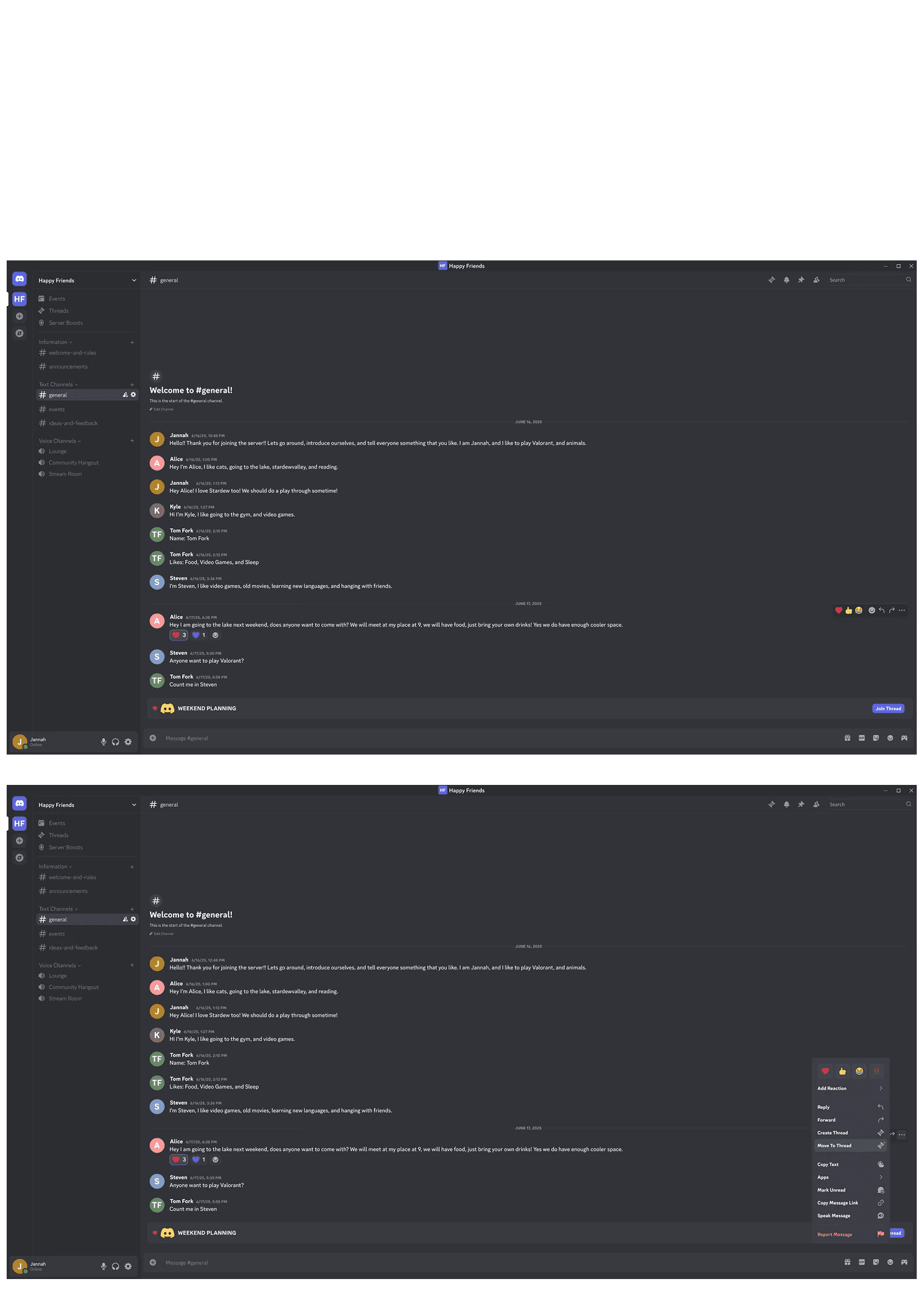
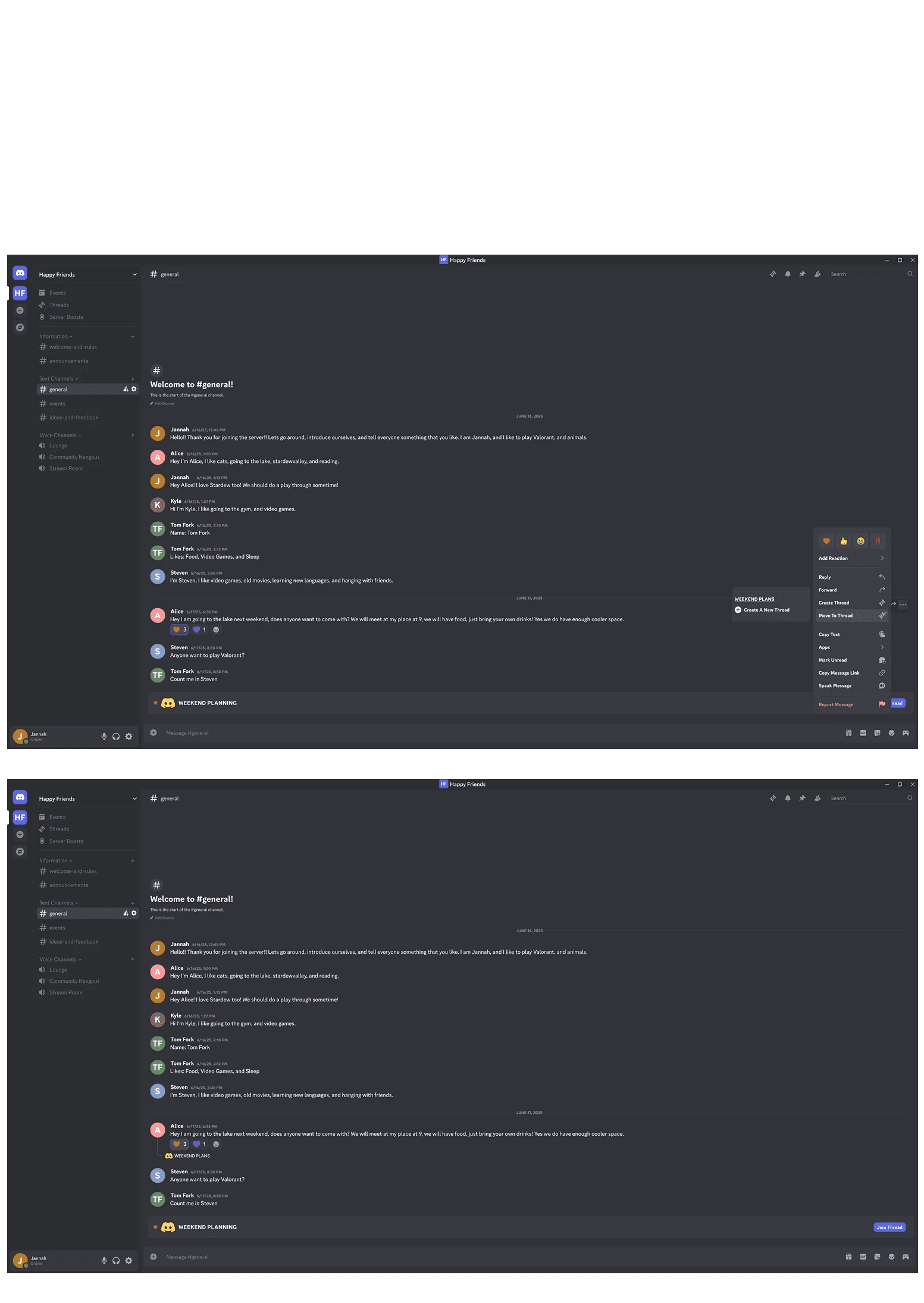
After testing, I refined key areas for greater usability and control:
Refined Notification Settings Entry Points: Added multiple access paths and visual indicators for better discoverability.
Enhanced “Move to Thread” Feedback: Added preview steps to clarify which messages were being moved.
Maintained Visual Consistency: Preserved the design language users recognised as authentically Discord.
These updates helped balance functionality with brand familiarity — reinforcing that good UX feels invisible when done right.
Reflections: Designing for Familiarity, Not Reinvention
Looking back, the most valuable lesson was that improving adoption doesn’t always mean adding new features — sometimes it’s about helping users see the value in what’s already there.
By focusing on discoverability, hierarchy, and flow, I turned a neglected feature into a potential anchor for clearer, more engaging communication. The redesign showed that small, intentional design shifts can drive significant behavioural change.
Next steps include refining notification behaviour for mobile and scaling the feature across large community servers to measure adoption.
Key Takeaway: Visibility drives adoption. Clarity beats complexity. And great design makes the familiar feel new again.