Uncovering Why the Website Causes Cognitive Overload
Walmart’s desktop experience feels overwhelming, visually cluttered, and disconnected from the mobile app, the experience users prefer. During interviews, shoppers shared that they often struggle to locate store-specific inventory, forget to swap store locations, or get lost in a homepage filled with competing information. Instead of helping users shop efficiently, the website creates decision fatigue and doubt.
“I have a hard time remembering or knowing to switch my store back to my main store, and end up having to drive out of my way to get groceries.” – Austin
“The website just feels busy. I don’t know where to look or what really matters, I’d rather use the app because it already understands me.” – Paige
“I wish the website made text and details easier to read. Even small things like bigger fonts or clearer labels would make a big difference.” – Ella
Users weren’t rejecting Walmart online, they were rejecting the friction.
Designing for Clarity and Personalization to Reduce Decision Fatigue
My goal was to close the experience gap between Walmart’s mobile app and its desktop website, making the site feel familiar, efficient, and personally relevant.
Three impact objectives guided the redesign:
Reduce Clutter – Simplify the homepage to remove distractions and help users focus on key actions.
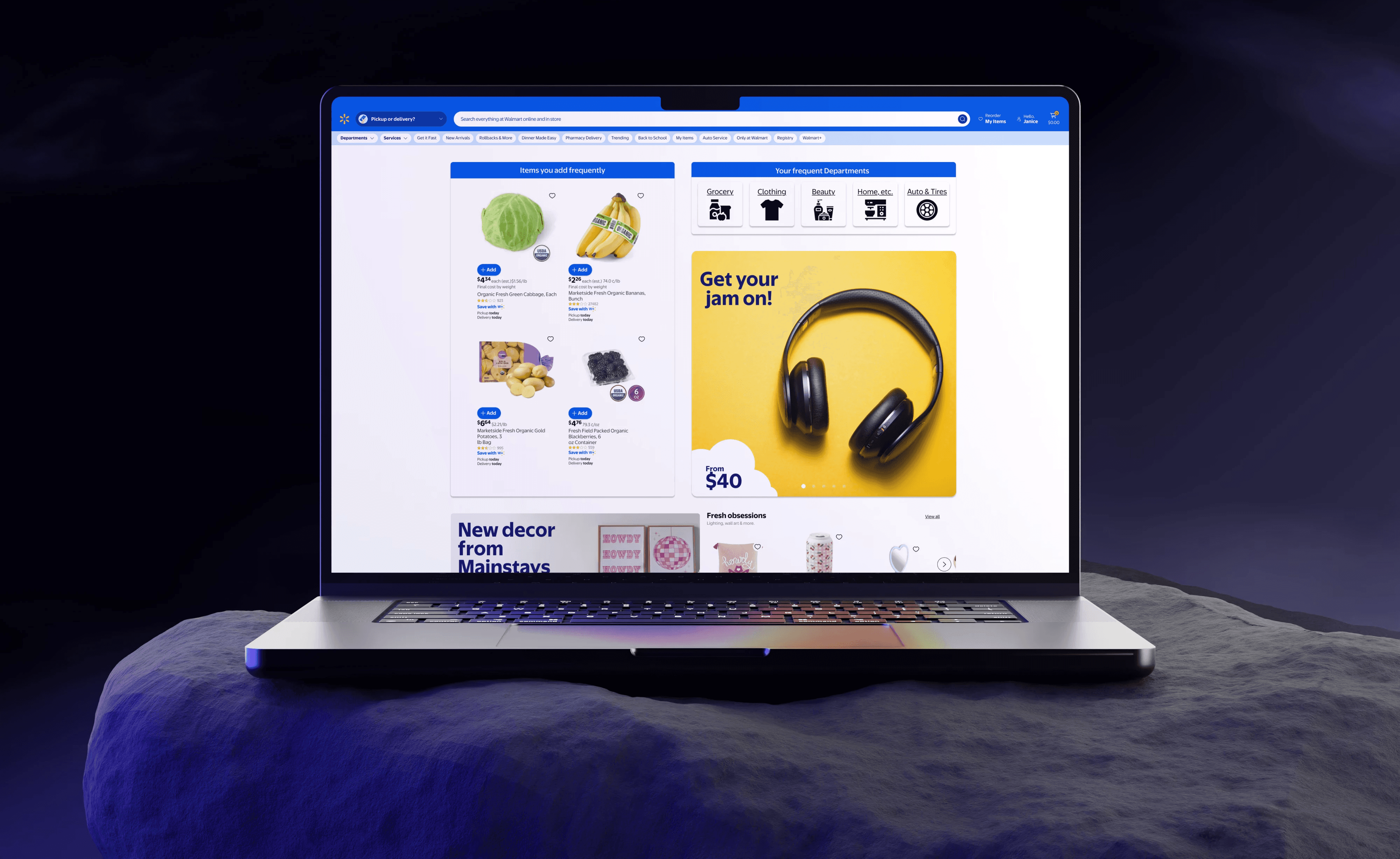
Increase Personalization – Display frequent items, saved shopping history, and tailored department shortcuts.
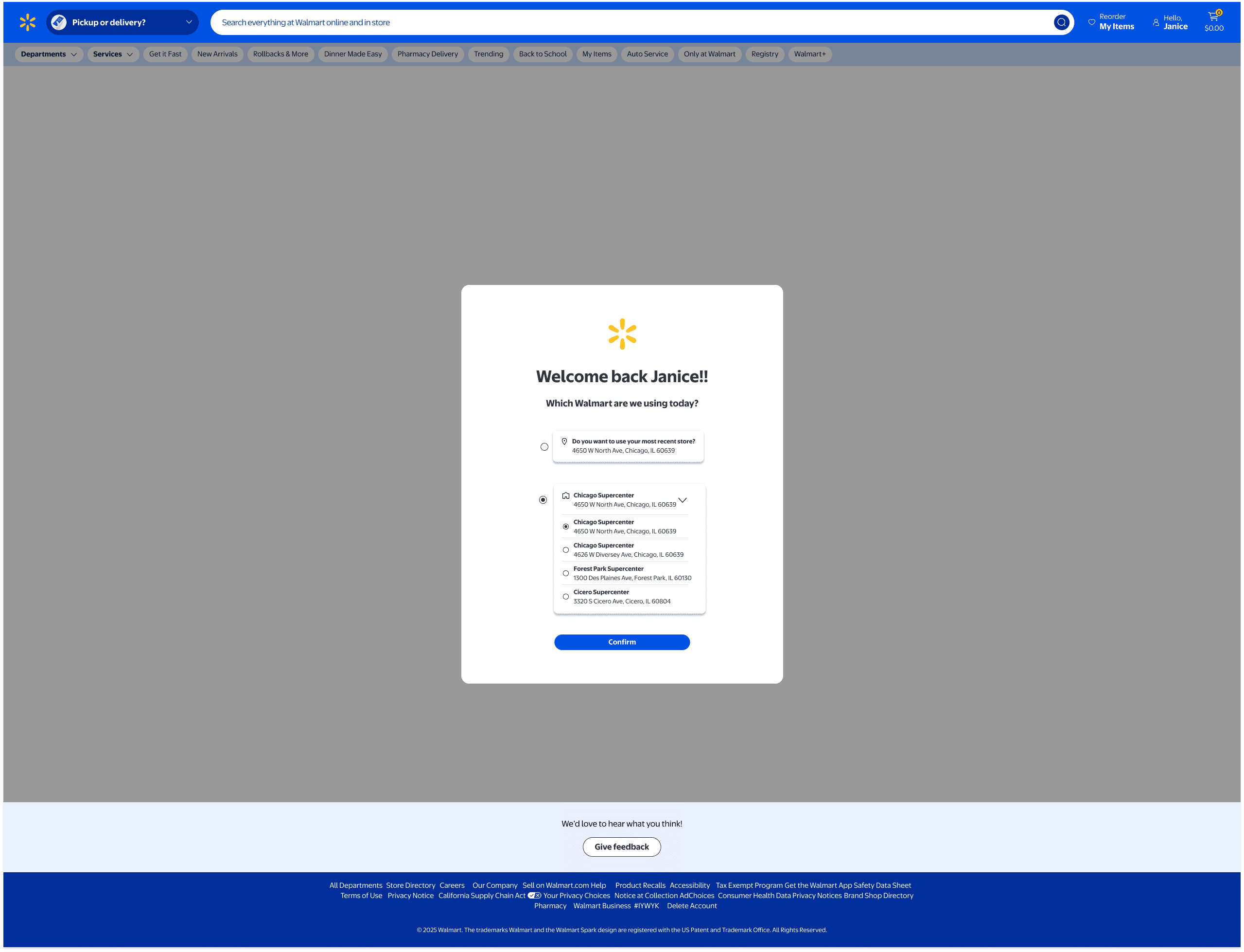
Eliminate Store-location Confusion – Make choosing or switching store locations the default starting point of the experience.
The goal wasn't just visual improvement, it was restoring confidence and reducing cognitive effort.
Improving the Shopping Experience Through Personalization
Usability tests showed that the redesign didn’t just look cleaner, it fundamentally changed how people interacted with the site. Users described the new layout as easier, intuitive, and closer to the mobile app experience they trust.
What Worked Well
Ease of Use: Signing in, selecting stores, and browsing frequent items required fewer clicks and less thought.
Personalization: Showing frequently purchased items and quick links to departments made users feel recognized.
Visual Clarity: Users called the redesign “aesthetically pleasing,” “organized,” and “10/10 compared to the live site.”
Familiarity: The redesign bridged the gap between desktop browsing and the efficient Walmart app experience.
Areas to Refine
Store Selection Click Zones: Small button areas created unnecessary precision and confusion.
Navigation Overwhelm: The site is still vast, and some users felt the large catalog could use more guidance.
Visual Balance: A few users wanted more color and liveliness to complement the cleaner layout.
Users overwhelmingly preferred the redesigned version and described it as clean, fast, and smart, not busy and confusing.

Mapping the Experience to Reveal Opportunities
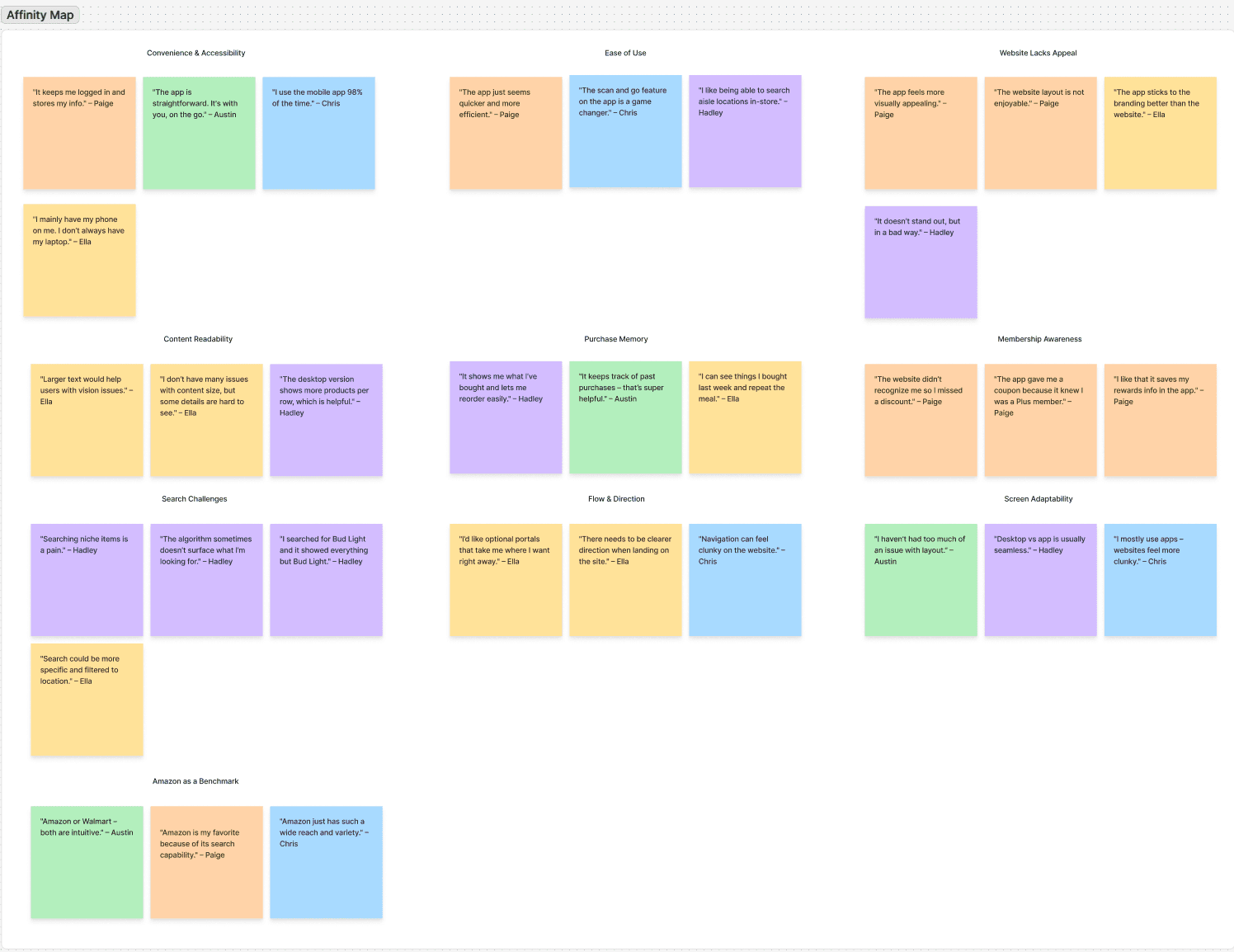
Through affinity mapping and persona development, it became clear that personalization was the missing element on desktop. Users wanted recognition of habits, not more navigation choices.
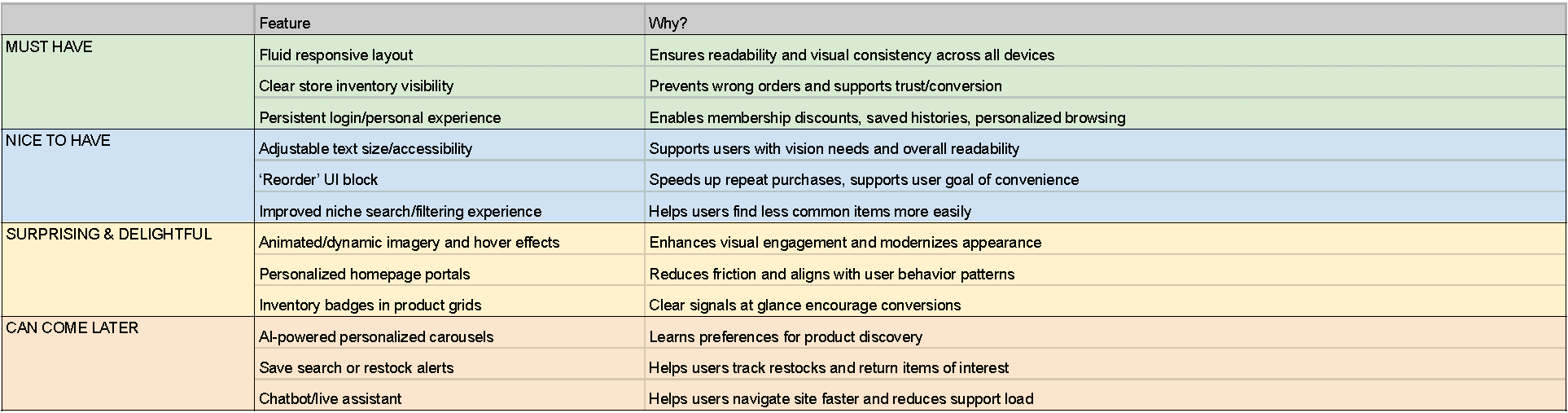
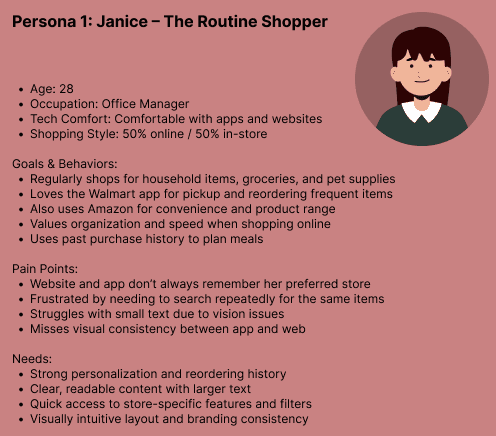
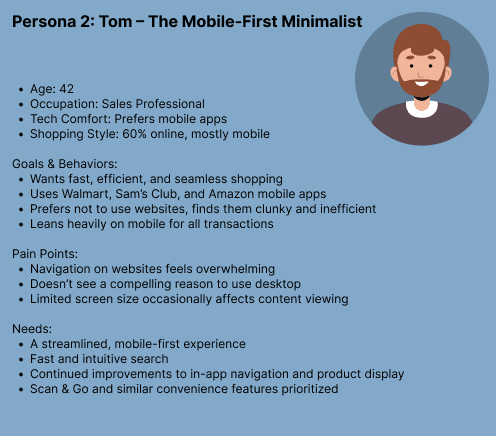
Walmart shoppers, from routine omnichannel buyers like Janice to mobile-first minimalists like Tom, struggle with overwhelming search, poor filtering, inconsistent app/web experiences, and missing personalization, as product overload buries quick needs, reordering falters, and mobile navigation frustrates. Digital shopping adds value for speed, pickup, and bulk convenience but feels chaotic without curation, trust signals, or seamless cross-device continuity. Key needs include strong personalization and reorder history, clear readable layouts with smart filters, fast intuitive mobile-first navigation, and consistent omnichannel branding.
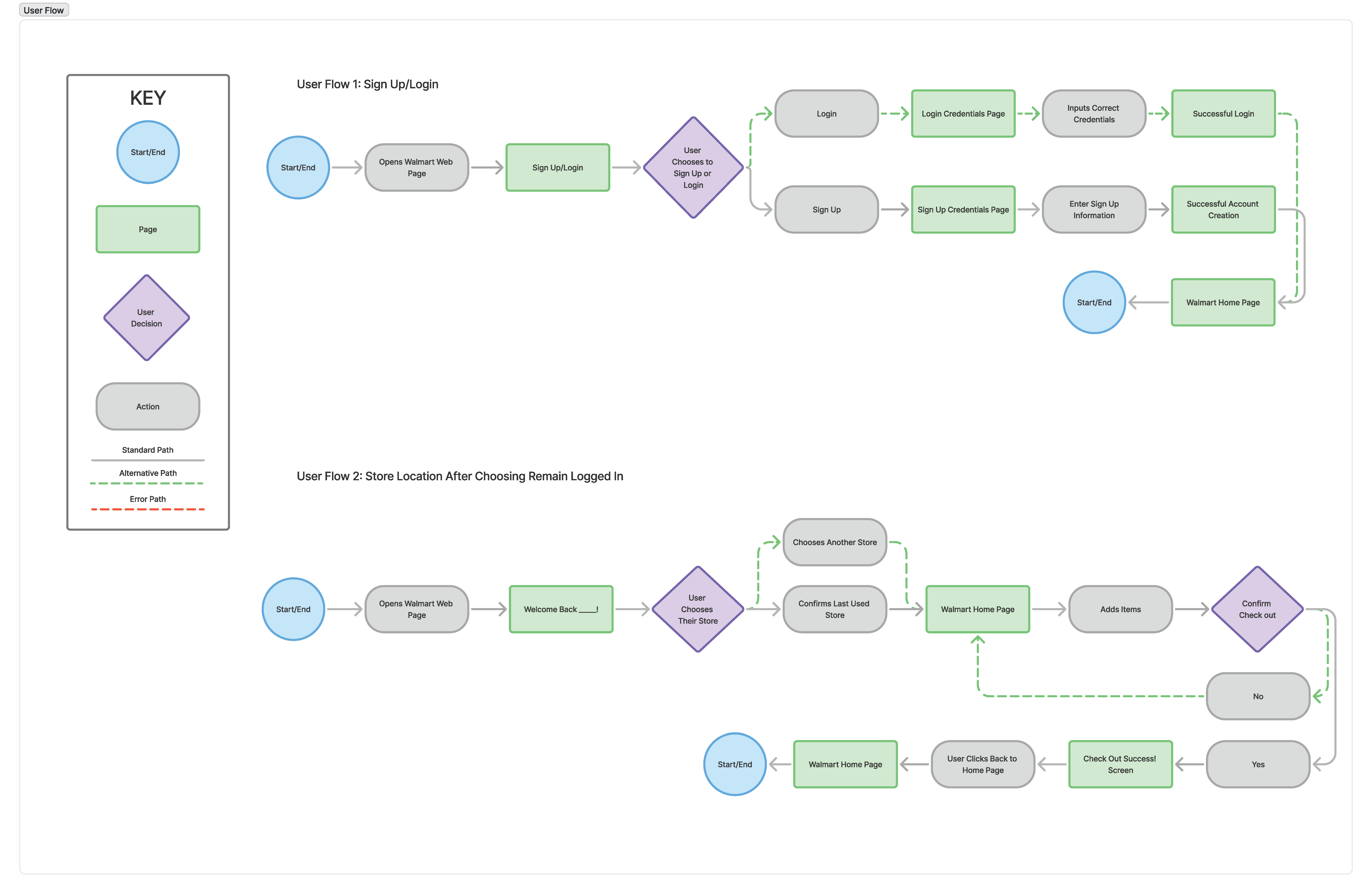
The proposed Walmart user flow enables seamless onboarding and omnichannel continuity by opening the web page, signing up or logging in with stored credentials, confirming or switching the last-used store, and proceeding directly to personalized home-page shopping. Returning users bypass login friction, instantly land on “Welcome Back” with their preferred store pre-selected, and can add items to checkout in one streamlined path, or opt to change stores without resetting context. This addresses overwhelm and consistency pain points by minimizing decision fatigue, preserving reorder history, and unifying app/web store linkage for faster, trust-driven purchases.

User flow analysis revealed key moments where shoppers lost confidence in the experience. Many users forgot to check store availability until late in the process, causing frustration when items were not available for pickup or delivery. Others became visually overwhelmed on the homepage and struggled to identify a clear starting point. Ultimately, several users abandoned the website entirely, stating that the mobile app felt faster and more intuitive.
Simplifying Navigation Through Thoughtful Wireframes
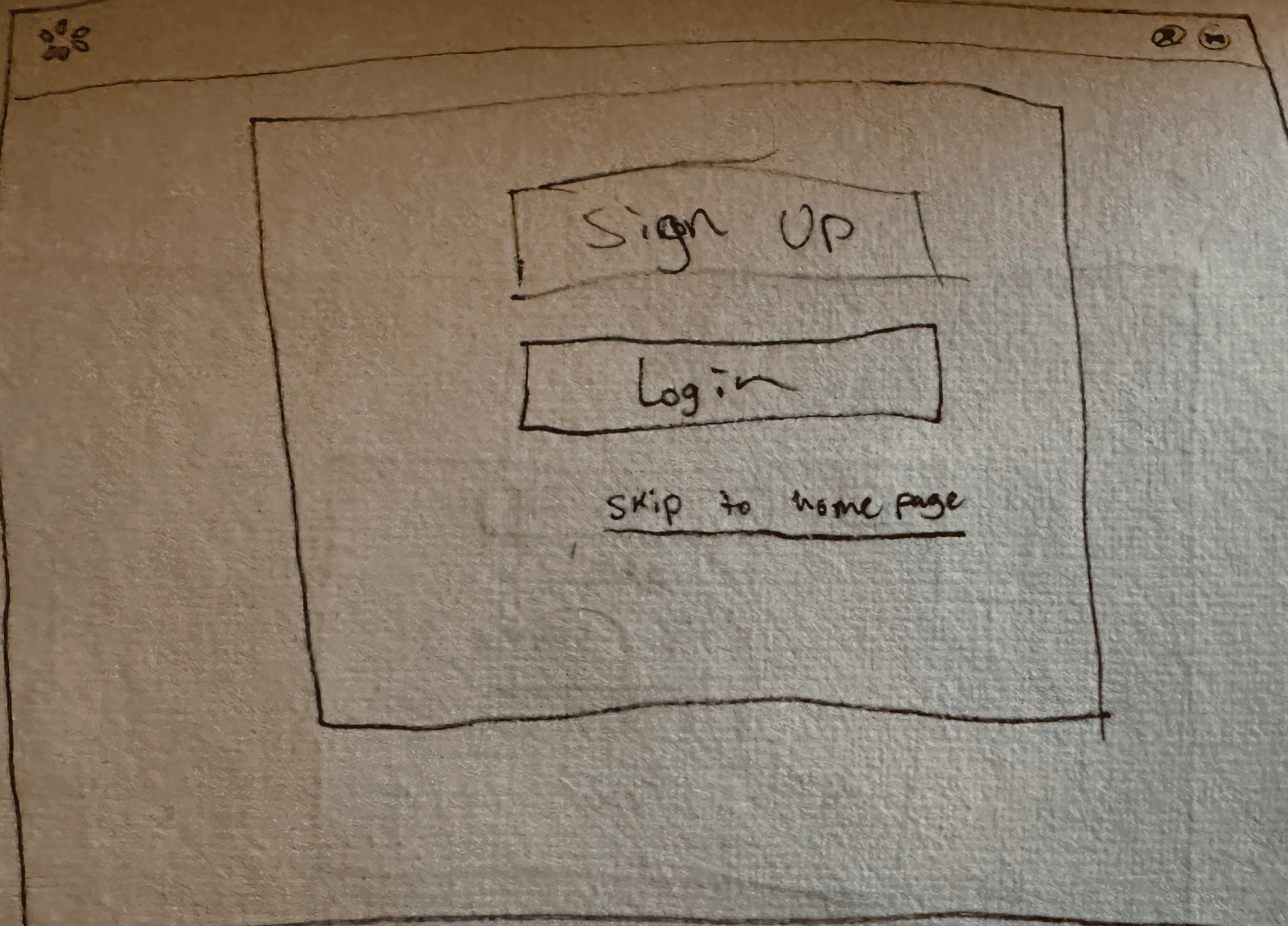
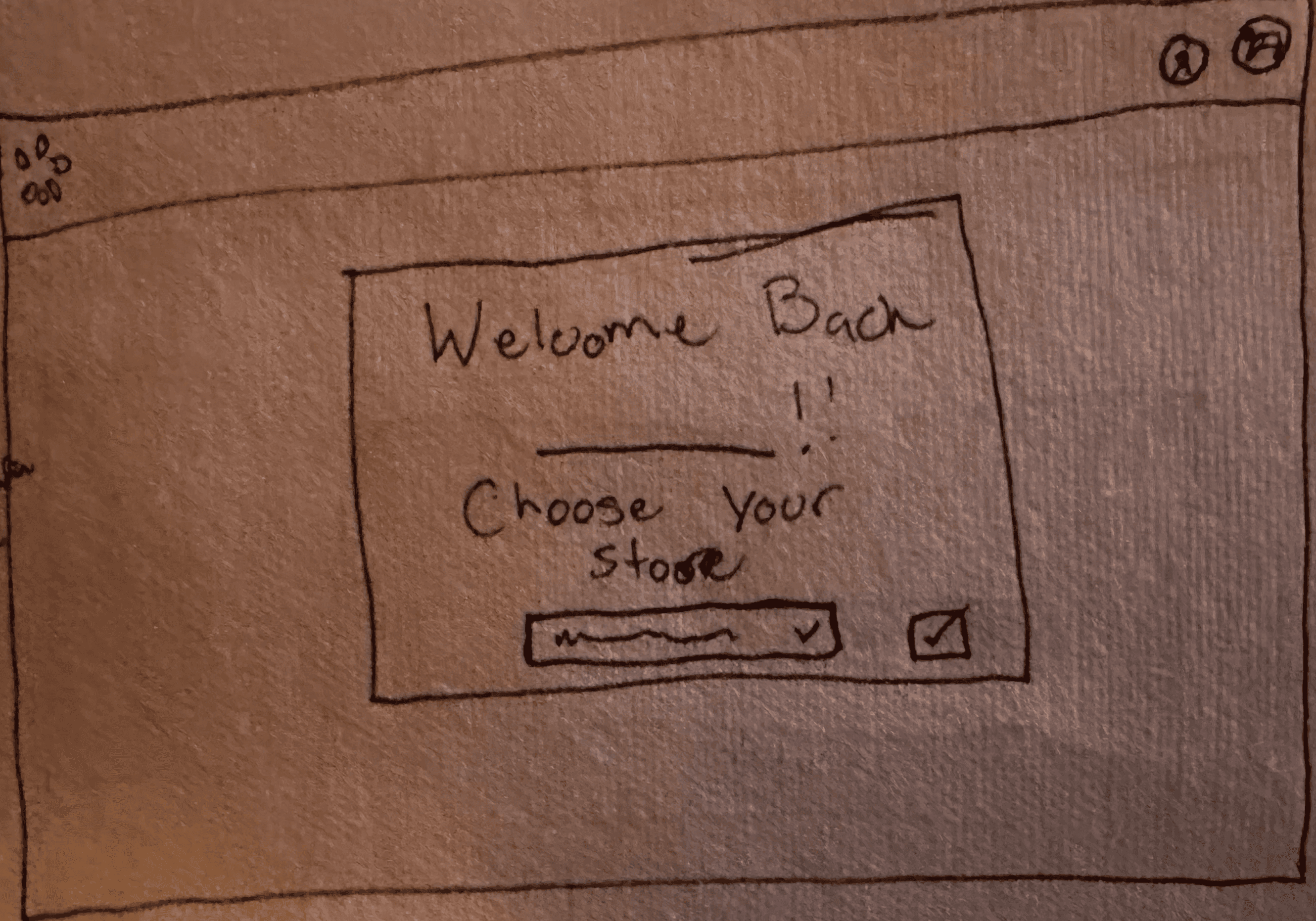
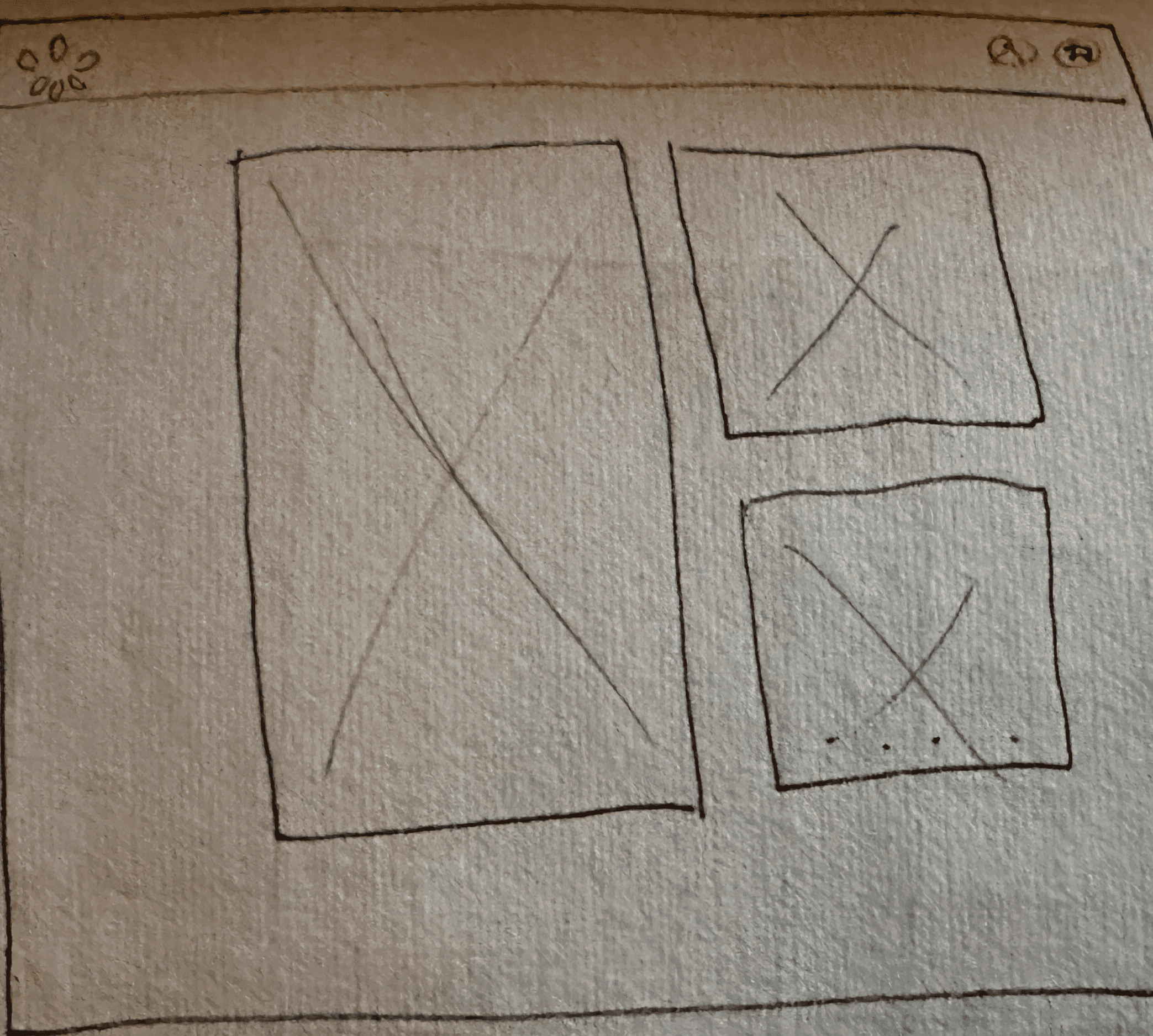


Keeping the Lo-Fi wireframe simple and in sync with Walmart's brand was first and more most in my mind, focusing mainly on the users concerns of remembering to pick/swap their store, and the busy feeling of the main webpage that users were feeling.
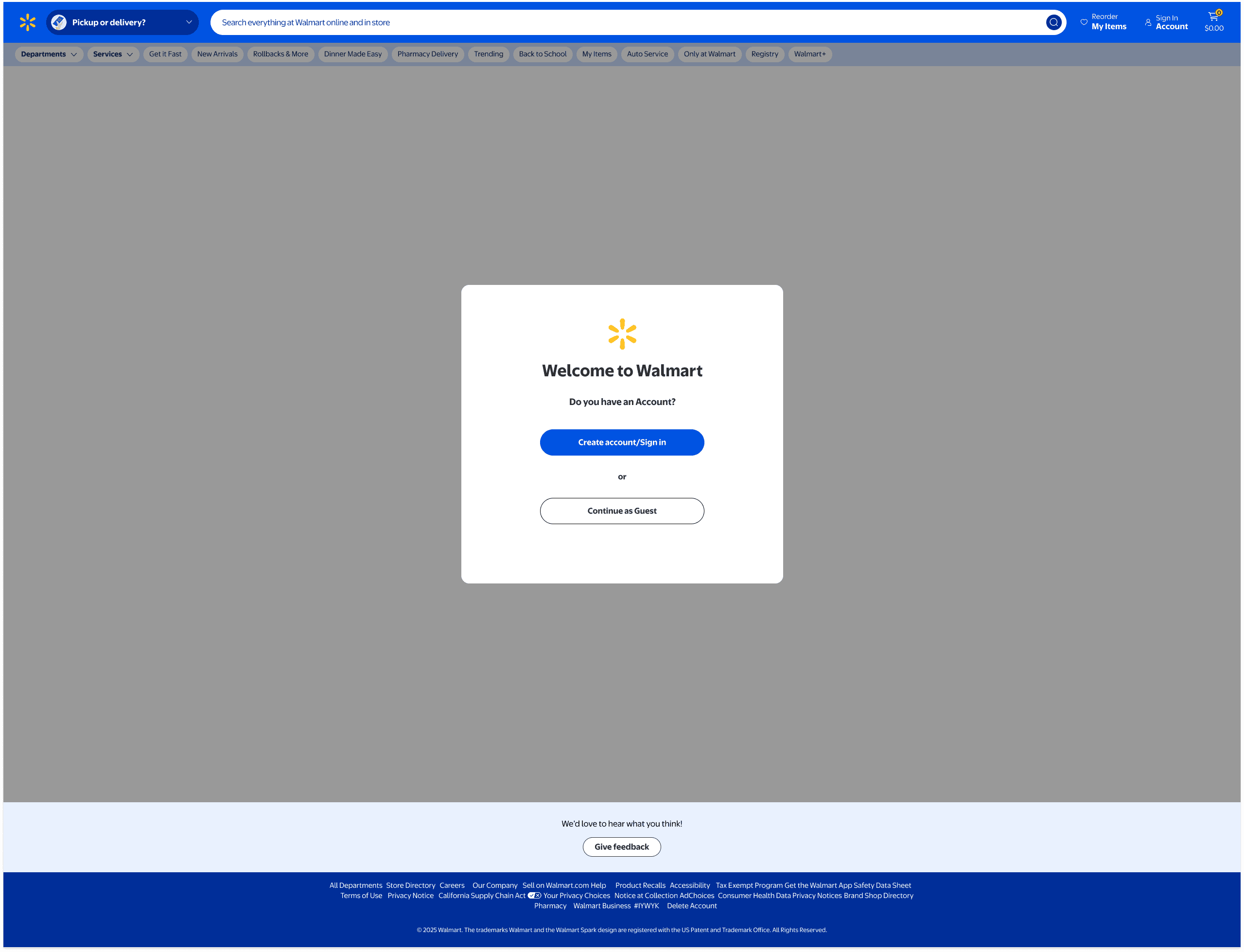
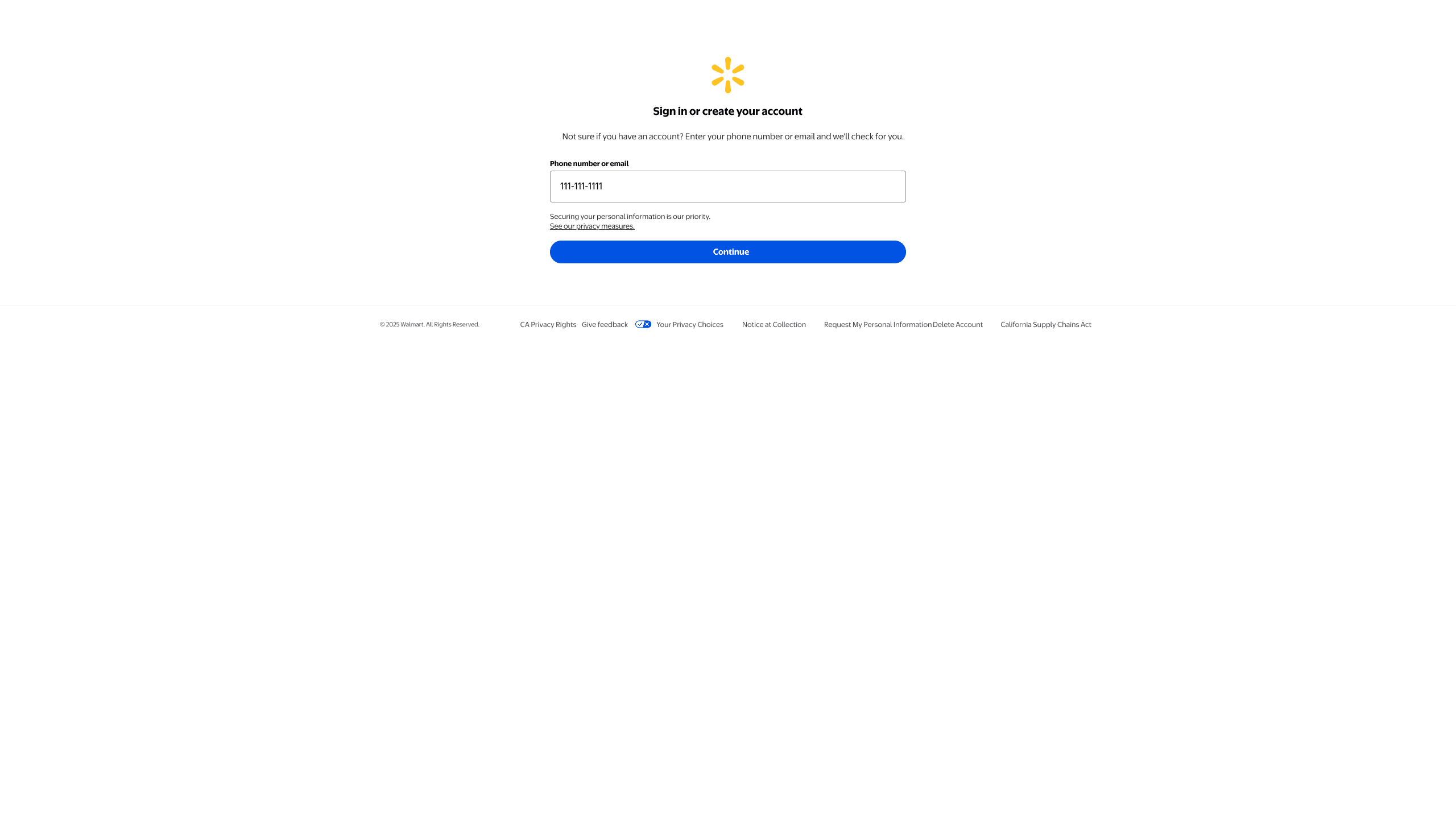
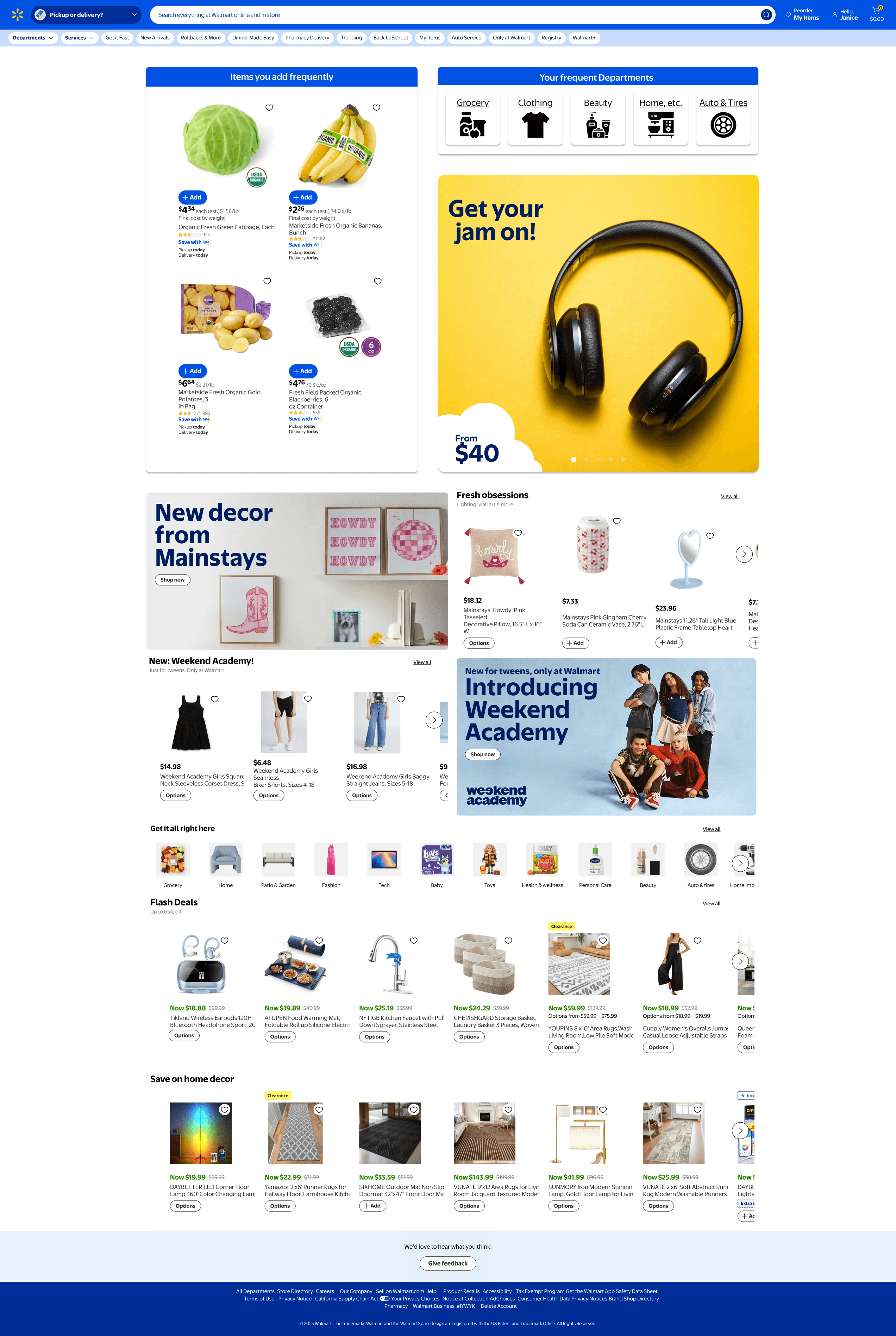
As with the any brand that has already been well established there was no reason to take away the users comfortability that they feel the visuals, so I made sure to keep the design as close to the brand as I could.
The low-fidelity wireframes focused on simplifying the visual structure of the page. I increased spacing, reduced competing visual elements, and prioritized personalization so shoppers could immediately see items relevant to their needs. As the designs moved into high fidelity, I refined the visual hierarchy, typography, and rhythm of the layout, resulting in a clean, modern system that felt true to Walmart’s brand rather than introducing a completely new visual direction.
Validating the Redesign Through Usability Testing
During usability testing, participants completed shopping tasks with noticeably less friction and greater confidence. They consistently rated the redesign highly, giving it a 9 out of 10 for clarity and ease of use, and several stated they would prefer this version of the website over the current one. Many described the new personalization elements as “helpful” and “time-saving,” reinforcing that even small improvements in clarity reduced cognitive load in a significant way.
Validating the Redesign Through Usability Testing
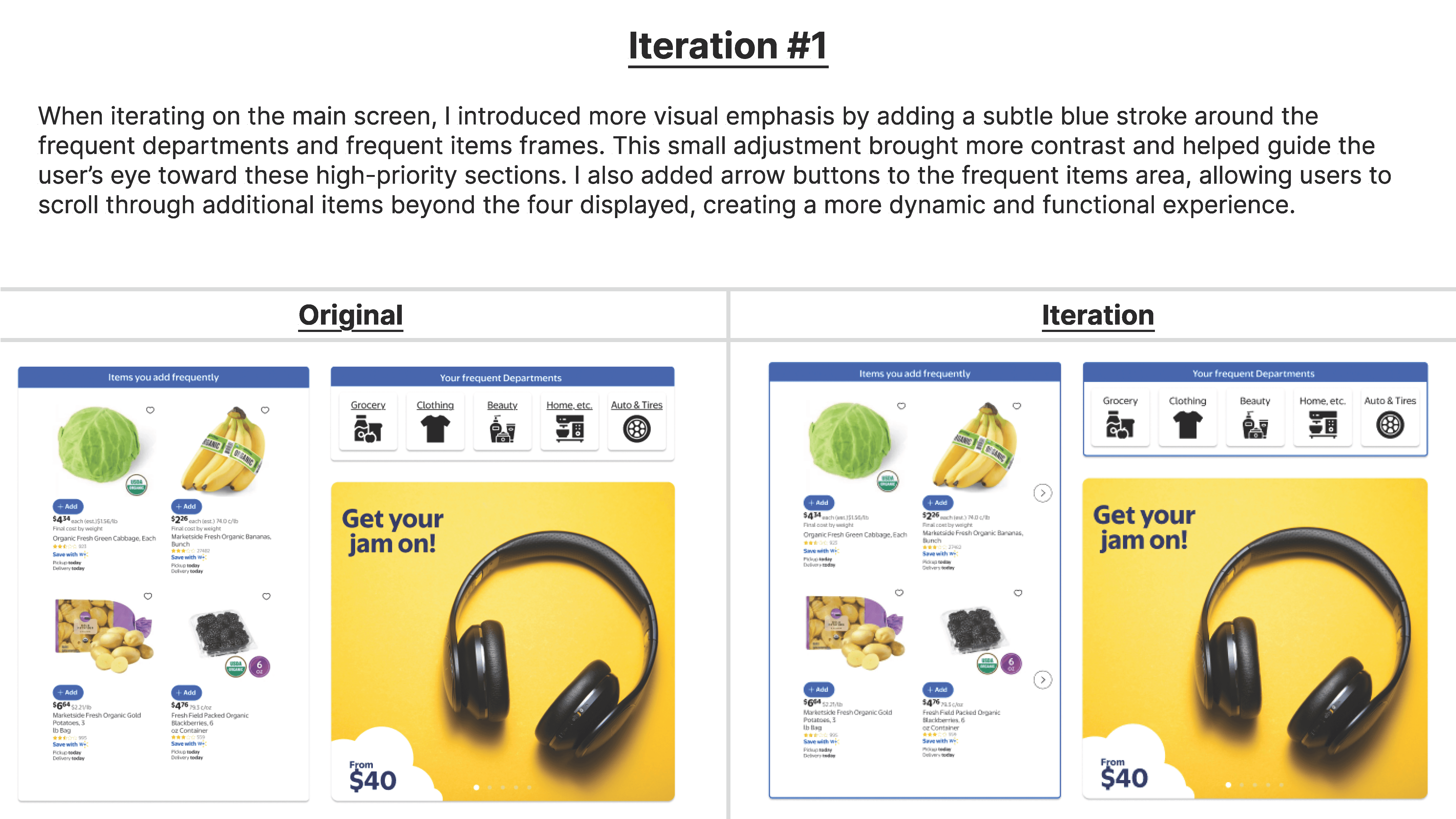
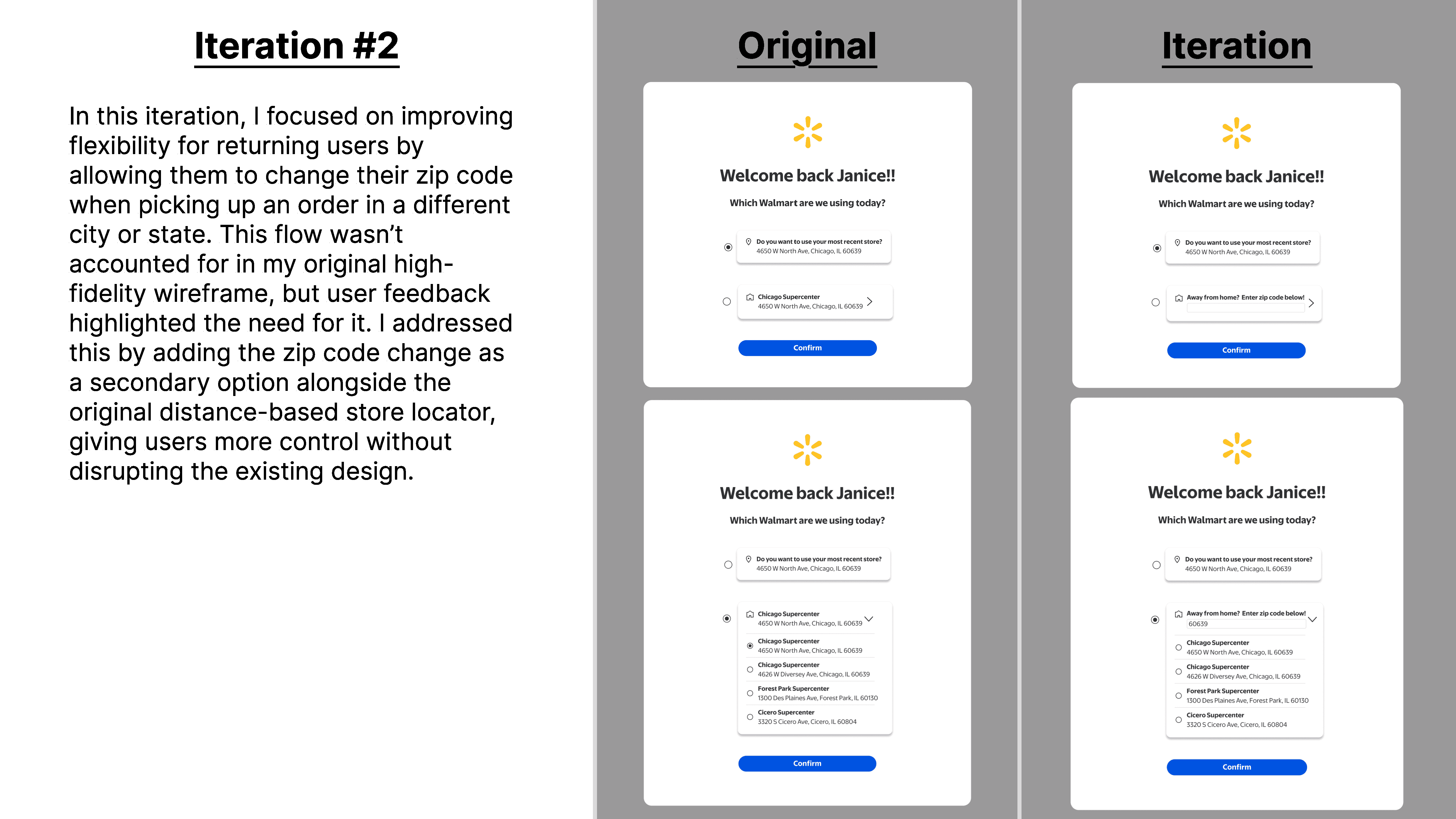
After testing, I refined several elements to make the experience even more intuitive. I expanded the click area around store selection to reduce mis-clicks, reinforced the visual hierarchy so users’ eyes naturally landed on key actions, and introduced more intentional use of color to balance clarity with visual warmth. These updates ensured that the redesign felt familiar and authentic to Walmart’s existing ecosystem, a better version of the website, not a reinvention of it.
Reflections: Designing for Clarity, Not Complexity
The biggest lesson from this project was that improving a product doesn’t always require adding complexity. Sometimes, the most impactful changes come from reducing visual noise, understanding user habits, and designing interactions that feel smart without demanding extra effort from the user. This redesign demonstrated that clarity leads to confidence, personalization builds loyalty, and cognitive ease increases conversion.
As next steps, I plan to expand personalization logic based on shopping behavior, such as time of day or seasonal patterns, and compare performance through A/B testing against the current Walmart homepage.
Key Takeaway: Visibility builds confidence. Personalization drives action. Thoughtful design makes even a large, overwhelming shopping experience feel effortless.